BREAKING: Russian Su-57 Pilot “Obliterates” U.S. Aircraft Carrier Carrying 700… What We Actually Know
A dramatic military headline is racing across social media claiming that a Russian Su-57 pilot has just destroyed a U.S. aircraft carrier carrying hundreds of people—or, in some versions, hundreds of tanks.
The wording is designed to sound like an immediate international emergency:
Browse Reference
“BREAKING: Just 30 minutes ago: Russian Su-57 pilot obliterates US aircraft carrier carrying 700…”
But there is a crucial problem with the story.
There is no credible confirmation that the alleged attack actually happened.
In fact, versions of the same claim have previously been identified as fictional or associated with video-game footage rather than genuine military reporting.
The Headline Sounds Like Breaking News
The phrase “just 30 minutes ago” is particularly important.
It creates a sense of urgency and encourages readers to believe they are witnessing an event before major news organizations have had time to report it.
Join the Air Force
The headline also uses words such as “obliterates,” immediately suggesting catastrophic destruction.
But dramatic language is not evidence.
For an event involving the destruction of a U.S. Navy aircraft carrier, confirmation would be extraordinarily important. Such a vessel is not an ordinary military target—it is a major strategic asset surrounded by an extensive support network.
A claim of this magnitude would require reliable evidence from multiple independent sources.
So far, that evidence is missing.
The Su-57 Is Real
One reason the story can initially appear convincing is that the aircraft at the center of it is real.
The Su-57 is Russia's fifth-generation multirole fighter, developed by Sukhoi. Russia's United Aircraft Corporation describes it as capable of carrying out missions against air, ground and sea targets.
Buy Maps
Russia has also continued delivering Su-57s to its armed forces.
In September 2026, Russia's state-owned Rostec said that United Aircraft Corporation had delivered another batch of Su-57 fighters in a new configuration.
So there is no question that the aircraft exists.
But the existence of a powerful fighter does not establish that the specific attack described in the viral headline occurred.
That distinction is essential when evaluating military stories online.
The Video Is the Biggest Red Flag
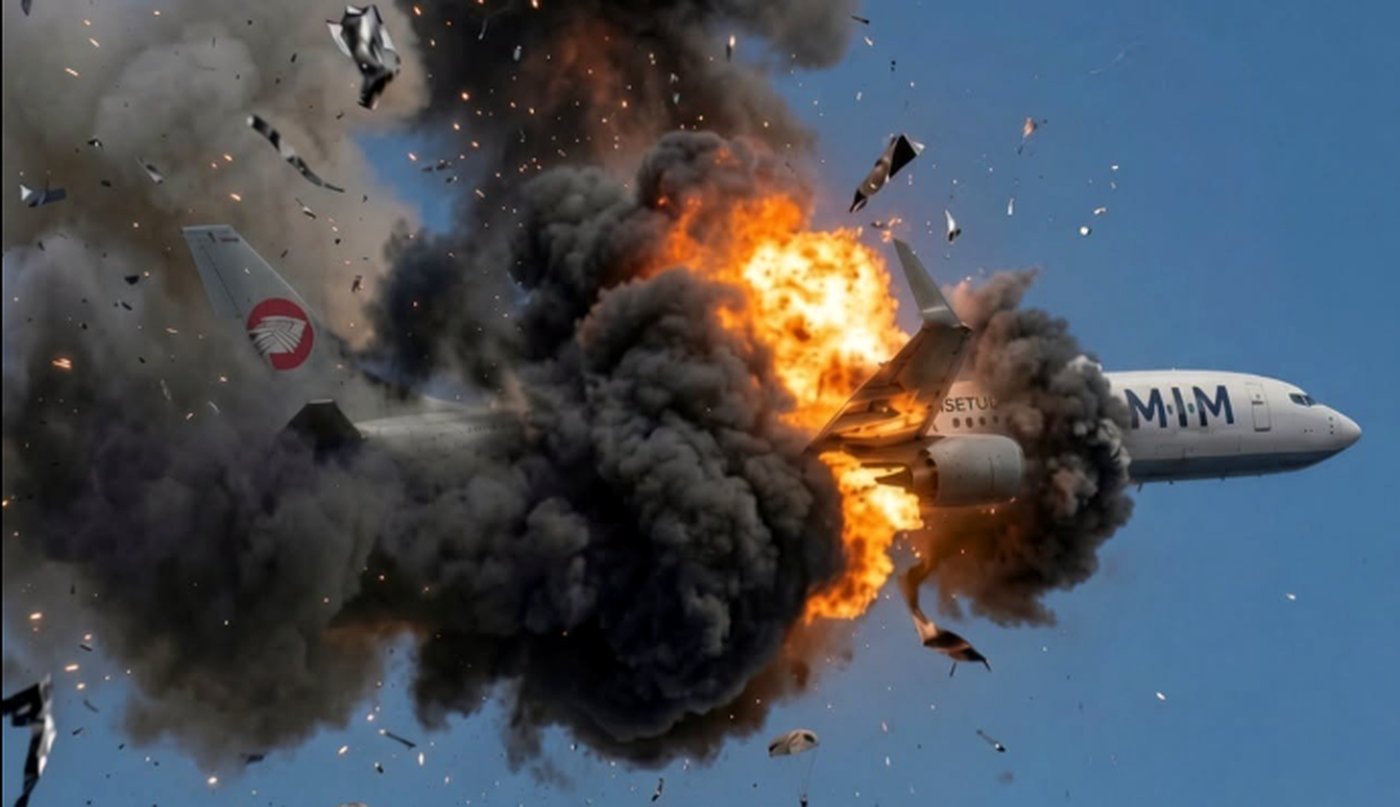
Some versions of the claim have been accompanied by highly realistic-looking footage showing a fighter aircraft attacking a large warship.
At first glance, the imagery can look convincing.
Tour Navy Ships
But one video carrying virtually the same headline explicitly identifies itself as an ARMA 3 virtual game simulation.
The video's description states that the footage is a virtual simulation and warns that the battle shown may differ from real events.
Another version using almost identical wording also identifies the footage as ARMA 3 gameplay.
That is a major warning sign.
ARMA 3 can create remarkably realistic military scenarios, and short clips can easily be separated from their original context and reposted as supposed news footage.
What About the “700” in the Headline?
The number itself is another reason to be cautious.
Different versions of the viral story have used different descriptions of what the carrier was supposedly carrying. Some versions refer to hundreds of personnel, while another prominent version specifically claims that the carrier was carrying 700 tanks.
That detail makes little sense in the context of a conventional U.S. aircraft carrier.
Browse Reference
An aircraft carrier is primarily a floating air base designed to operate aircraft, not a giant tank transport.
Military ships have very different purposes, and armored vehicles are normally transported using specialized logistics and amphibious vessels rather than aircraft carriers in the manner suggested by the viral headline.
This inconsistency further undermines the claim.
Real U.S. Carrier Operations Continue
There is also documented, recent information about U.S. aircraft-carrier operations.
Reuters reported on October 3 that the USS George Washington was operating as part of the U.S. military's ongoing activities related to the war with Iran. Reuters described the carrier as a floating city with around 5,000 personnel aboard and reported on the crew's operations at sea.
Learn a Language
That is useful context because it demonstrates the scale and complexity of an actual U.S. aircraft carrier.
It also shows why a claim that one had suddenly been destroyed would be an extraordinarily significant event.
A genuine loss of a major carrier would not simply be a story circulating on obscure websites and social-media videos.
It would require extensive confirmation.
Why Fake Military Stories Can Look So Convincing
Modern military simulations make misinformation particularly difficult to identify.
A video game can show:
Fighter aircraft
Join the Air Force
Aircraft carriers
Missile launches
Explosions
Smoke and fire
Naval formations
Radar displays
Aircraft crashes
When a short clip is removed from its original context, viewers may have no immediate way of knowing whether they are seeing real footage or computer-generated gameplay.
The accompanying headline then provides a narrative.
Once someone sees the words “Russian Su-57 destroys U.S. aircraft carrier,” the brain naturally interprets every explosion in the video as evidence supporting that claim.
Compare Cars
But the video and the claim are two separate things.
The first question should always be:
Where did the footage originally come from?
A Real Su-57 Does Not Mean a Real Attack
This is one of the most important lessons from the viral story.
The Su-57 is real.
The U.S. Navy's aircraft carriers are real.
Russia and the United States possess sophisticated military technology.
But putting real military equipment into a fictional scenario does not turn that scenario into a real event.
Military video games, simulations and fictional combat animations regularly use real aircraft and warships.
Tour Navy Ships
That is exactly why verification matters.
What Would Confirm an Attack?
If a Russian fighter really destroyed a U.S. aircraft carrier, there would likely be multiple forms of evidence.
Among the most important would be:
Official statements from the U.S. Department of Defense or Navy.
Independent reporting from major international news organizations.
Verified imagery showing the actual vessel and location.
Satellite or maritime evidence consistent with the reported event.
Statements from multiple independent sources rather than websites repeating one another.
Buy Maps
Clear information about the vessel involved, including its name and location.
A viral video alone would not be enough.
Especially when the same footage has already been identified as a computer-game simulation.
The Bigger Danger Is the Speed of the Rumor
The most troubling part of these stories is often not the content itself but how quickly they spread.
A headline saying “30 minutes ago” creates pressure to click.
A dramatic photograph encourages people to stop scrolling.
A video makes the claim feel real.
And once hundreds or thousands of people share it, repetition can create the illusion of confirmation.
Learn a Language
But repetition is not verification.
Ten accounts repeating the same unsupported claim do not represent ten independent confirmations.
They may all have copied the same original post.
What We Actually Know
As of now, the claim that a Russian Su-57 pilot has “obliterated” a U.S. aircraft carrier carrying 700 is not established as a real event.
The Su-57 itself is genuine, and Russia has recently received additional examples of the aircraft.
But matching videos associated with the sensational claim have been identified as ARMA 3 simulations, not authentic combat footage.
Recent reporting also continues to document real U.S. carrier operations, including those of the USS George Washington.
Join the Air Force
There is therefore a major difference between the military capabilities described in the headline and evidence that the alleged attack actually occurred.
The Bottom Line
The viral headline may look like an urgent declaration of war, but there is no credible evidence establishing that a Russian Su-57 has just destroyed a U.S. aircraft carrier carrying 700 people or tanks.
The most important clue is the accompanying footage: versions of the same scenario have been explicitly identified as ARMA 3 virtual gameplay.
For now, the story belongs in the category of unverified viral military claims—not confirmed breaking news.
Before sharing a headline like this, check the original video, look for official statements and see whether independent news organizations are reporting the same event.
Compare Cars
When the alleged event would amount to one of the most significant naval attacks in modern times, extraordinary claims require extraordinary evidence.