
THE FAMILY REACTION — How One Wheel Of Fortune Win Turned Into An Emotional Celebration
A routine appearance on Wheel of Fortune turned into a deeply emotional family moment when contestant Dedric pulled off a stunning Bonus Round victory and secured an additional $40,000. The episode had already been a strong one for the player, who built his total steadily through several successful puzzles before becoming the evening’s overall winner. He began by solving the Second Toss-Up, earning $2,000 with the answer Seen a Ghost, before adding considerably more money during the Prize Puzzle round. His correct solution, The Ultimate in Tranquility, brought him a valuable trip to Patagonia worth $16,390. Dedric then continued his impressive run by succeeding in the Triple Toss-Up, adding another $4,000 and taking his total winnings to $20,740. That performance earned him a place in the Bonus Round, where the stakes suddenly became much higher. Standing beside host Ryan Seacrest, Dedric introduced his wife, Janelle, and his 10-year-old daughter, Ashton, who had been watching and supporting him throughout the game. What followed was not simply another contestant trying to solve a final puzzle. It became a moment in which the excitement of winning money collided with the emotional reaction of a young daughter watching her father achieve something extraordinary. (Market Realist)
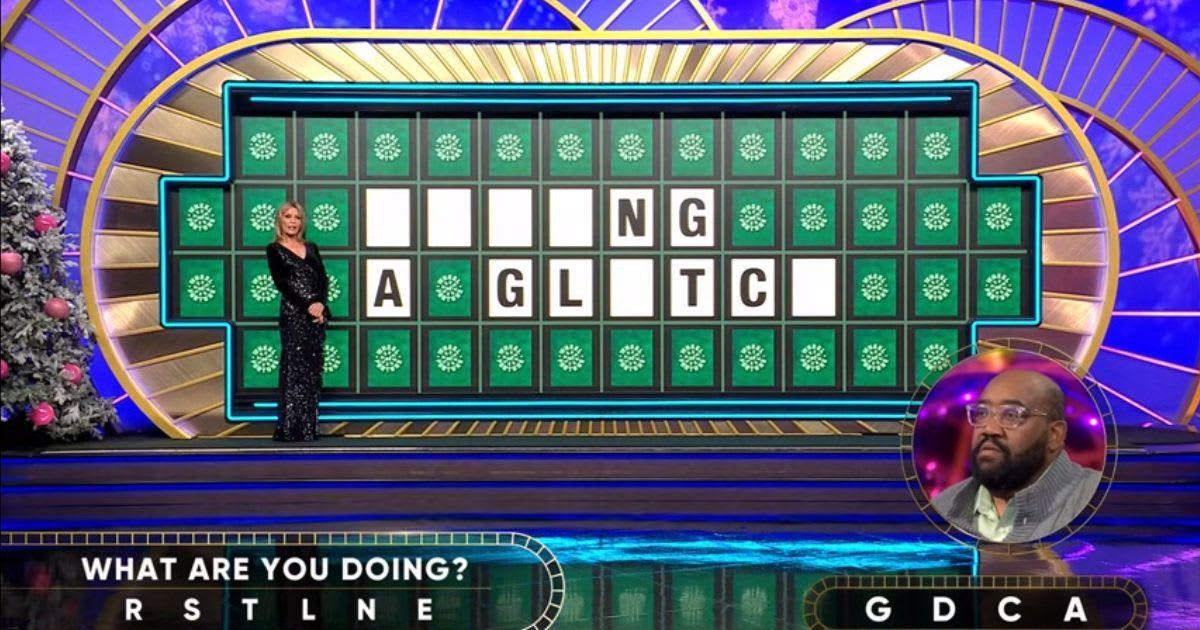
When Dedric reached the Bonus Round, he had already accomplished what many contestants hope to achieve: he had won the game and accumulated a substantial amount of cash and prizes. But the final challenge offered the possibility of adding another $40,000 to his total. He selected the category What Are You Doing?, then received the familiar collection of letters R, S, T, L, N and E before choosing G, D, C and A as his additional letters. Once the letters appeared, the puzzle began to take shape. The board revealed a phrase that Dedric needed to solve against the pressure of a ten-second clock. The tension was immediate because the Bonus Round can transform a comfortable victory into a spectacular one or leave a contestant wondering what might have been. Dedric, however, managed to recognise the answer and confidently gave Fixing a glitch. His solution was correct, triggering the revelation that he had won another $40,000. That additional prize lifted his total winnings to $64,740, turning what had already been an impressive performance into a major personal victory. Ryan Seacrest celebrated the result with him, and Dedric responded with an excited little dance on stage. Yet the biggest emotional reaction was not necessarily coming from the contestant himself. As the cameras turned toward his family, the atmosphere changed dramatically.
Dedric’s reaction after solving the puzzle was itself revealing because he appeared almost unable to process what had just happened. When Seacrest asked him what it felt like in that moment, Dedric admitted that he was still processing everything. He had entered the Bonus Round knowing that one correct answer could dramatically increase his winnings, but the reality of actually achieving it appeared to overwhelm him. His response was not simply the triumphant celebration of someone who had won a large cash prize. There was a sense that he was trying to understand the significance of the moment while standing in front of the audience and cameras with his family watching. The $40,000 bonus was substantial enough to transform the final total into $64,740, but the emotional significance appeared to come from sharing the achievement with the people closest to him. His wife and daughter were not passive observers. They had been part of the journey, watching him solve puzzle after puzzle and eventually make it through to the final challenge. Once the bonus was revealed, they were invited onto the stage to celebrate with him. That family reunion made the victory feel much more personal than a simple financial achievement. For Dedric, the game had become an experience that he could share with his wife and daughter, while for Ashton in particular, watching her father succeed appeared to create an emotional moment she could barely contain. (Market Realist)

The most touching moment came when the camera focused on Ashton, who was visibly overwhelmed and began crying tears of happiness for her father. Her reaction immediately caught the attention of viewers because it shifted the focus away from the money and toward the emotional bond between a child and her parent. A $40,000 prize can be measured numerically, but a young daughter becoming emotional as she watches her father accomplish something important cannot be reduced to a figure. Ashton had been there as part of his support system, and seeing him succeed appeared to mean more to her than simply watching someone win a television game. Fans responded warmly to the scene, with viewers describing her tears as especially sweet and celebrating the happiness she showed for her father. One reaction highlighted how touching it was to see the daughter become emotional, while another praised the moment as a particularly wholesome part of the episode. Those responses demonstrate why family reactions often become some of the most memorable parts of Wheel of Fortune. Contestants may arrive hoping to win money, prizes or recognition, but when relatives become visibly emotional, the story becomes something broader. It becomes about shared experiences, pride and the feeling of seeing someone you love achieve something they may have dreamed about. Ashton’s tears therefore became almost as memorable as Dedric’s winning answer itself.
There was also something particularly satisfying about the way Dedric’s entire game unfolded. He did not simply stumble into the Bonus Round through one lucky guess. He built his advantage through a series of successful performances. The Second Toss-Up gave him an early $2,000 boost, while his solution to the Prize Puzzle delivered the impressive Patagonia trip. His success in the Triple Toss-Up then added another $4,000, bringing him to $20,740 before the final challenge. That progression meant the Bonus Round was the culmination of an already successful night rather than the only moment in which he performed well. Once he solved Fixing a glitch, the additional $40,000 became the final piece of an increasingly impressive result. The victory also demonstrated the unique pressure of the Bonus Round. Contestants can dominate earlier rounds and still leave without the major cash prize if they cannot identify the final phrase within ten seconds. Dedric avoided that fate. He found the answer and transformed the atmosphere instantly, going from nervous anticipation to celebration. His wife and daughter could then join him on stage, turning the final seconds of the episode into a family celebration rather than simply a financial reveal. In that sense, the Bonus Round did exactly what the show often promises: it created a dramatic final test that could completely change the emotional tone of the night.

The reaction from viewers showed that Dedric’s victory resonated for reasons beyond the amount of money he won. Fans often become invested in contestants when they see their personalities, relationships and personal stories develop during an episode. In Dedric’s case, the introduction of his wife Janelle and daughter Ashton gave viewers a glimpse of the people waiting to celebrate with him. That made the eventual victory feel shared. When Ashton began crying, viewers immediately recognised the authenticity of the reaction. There was no elaborate explanation required: she was simply overwhelmed with happiness for her father. Other viewers praised Dedric’s solve itself, noting that he appeared to have worked out the answer quickly despite the pressure of the timer. Some fans also compared the puzzle with an earlier appearance on the show, illustrating how familiar phrases can sometimes produce very different outcomes depending on the contestant and the circumstances. But the dominant reaction centred on the family. The emotional response reminded audiences that contestants do not compete in isolation. Behind many players are spouses, children, parents, siblings and friends who have travelled with them and invested emotionally in their journey. When the contestant wins, those people experience the victory too. In Ashton’s case, that shared joy became one of the defining images of the episode and helped turn Dedric’s Bonus Round success into a story viewers wanted to talk about after the show ended.
Ultimately, Dedric’s appearance on Wheel of Fortune became memorable not only because he won $64,740 in total, but because of the extraordinary family reaction that followed his Bonus Round solve. His performance had already taken him from an early $2,000 victory to a valuable Patagonia trip and then to the top position, but the final $40,000 prize transformed the night into something even more special. Standing beside Ryan Seacrest, Dedric admitted that he was still processing what had happened, while his wife joined him in celebrating and his 10-year-old daughter watched with tears of happiness. Those tears became the emotional centre of the story because they showed how deeply the achievement affected someone who was there not for the prize itself, but for the person winning it. The money will undoubtedly make a difference, but the memory of Ashton’s reaction may prove to be the part of the experience that lasts longest for the family. For viewers, it was another reminder that the most powerful Wheel of Fortune moments are not always created by the biggest prize. Sometimes, they come from the people standing beside the contestant when the answer is revealed. Dedric solved Fixing a glitch in seconds and won $40,000 — but was his daughter’s emotional reaction the real moment that made this Bonus Round victory unforgettable?
 Nora Patel
Dolly Parton stepped into the Tennessee heat on June 24 wearing towering stilettos, full glamor, and the kind of smile fans had recognized for decades. Her surprise appearance at the ribbon-cutting for Dolly’s Tennessean Travel Stop outside Cornersville had not been announced, so the crowd reacted with the delighted shock of people suddenly realizing they were standing only feet from a legend. Witnesses remembered her cracking jokes, speaking warmly, and appearing genuinely happy. Nashville concert reviewer Stacy Best later said Parton seemed “not in pain at all,” while Miss Grand Tennessee Amanda Bell described her as the same “happy, spunky self” fans knew. Yet Bell also noticed that Dolly was moving more slowly than usual, and another attendee, Brooks Ramsey, recalled that her handlers were unusually careful with her. At the time, those details seemed minor. Two months later, after Parton’s death at 80, they became some of the most closely examined moments from one of her final public outings.
Parton died on August 25, 2026, at Nashville’s Vanderbilt-Ingram Cancer Center following what her representatives described as a brief battle with cancer, although the specific type was not publicly disclosed. By then, health concerns had already begun reshaping a schedule that once seemed almost impossible to slow down. In August she canceled a Dollywood appearance after telling fans she had been dealing with dizziness and dehydration, joking that doctors had told her she “ain’t traveling this week.” Five days later she appeared virtually to accept the Academy of Country Music Poet’s Award, speaking not about illness but about songwriting as the force behind every dream she had ever seen come true. Even earlier, in an August 11 video about her Broadway musical, she had cheerfully said she planned to attend as much as possible, adding the familiar Southern phrase, “good Lord willing and the creek don’t rise.” Nothing about the remark sounded like a farewell then. In hindsight, it became one of those ordinary sentences whose meaning changed completely because of what happened next.
The more painful revelation came after her death, when reports suggested that the public version of Parton’s health struggles may have represented only part of what she was enduring. Sources described her as having been seriously ill for months and said she intentionally kept the severity of her condition within a small inner circle. Her husband of nearly sixty years, Carl Dean, had died in March 2025, and Parton later acknowledged that while caring for him she had neglected some of her own health problems. In July 2026, she also lost her older brother Coy “Denver” Parton, adding another layer of grief during an already difficult period. Only four days before her own death, she reportedly admitted in a final interview that she was dealing with health issues she had failed to prioritize while looking after Carl. She was hospitalized that same day, August 21. The contrast between those private struggles and the woman witnesses remembered in Cornersville—still joking in five-inch heels—made that June afternoon feel less like a routine promotional appearance and more like a glimpse of how hard she was working to remain herself in public.
Witnesses now remember the event in two layers. Onstage, Parton welcomed the crowd, joked about competing with Buc-ee’s, thanked people for coming and filmed additional promotional material inside the store. Offstage, those around her appeared to be protecting her energy and monitoring how much she did. Ramsey’s observation that her handlers were “careful with her that day” carries particular weight because Parton’s health would increasingly limit travel and public appearances during the weeks that followed. Her slower movement, brief time before the crowd and later cancellations now fit into a larger pattern that had not been obvious in real time. Yet nothing witnesses described suggested defeat. They remembered humor, polished clothes, signature stilettos and a woman determined to participate fully in the few minutes she had chosen to give them. For someone whose public identity had always been built on color, wit and control over her own presentation, that distinction matters: the body may have been asking for caution, but Dolly Parton was still deciding what the audience would see.
That may be why the Cornersville appearance has become so meaningful after her death. People who were there did not come away talking primarily about frailty. They remembered how happy she seemed, how she joked, how she wore heels that most people decades younger would refuse to attempt, and how unmistakably “Dolly” she remained. The warning signs were there, but so was something else: intention. She knew how she wanted to walk into a room, how she wanted fans to remember her, and even during a period of serious illness, she apparently refused to let sickness become the only story surrounding her. Looking back, the most poignant detail may not be that she moved slowly or that handlers stayed close. It is that she showed up anyway, dressed exactly as herself, made people laugh, cut the ribbon and left them believing they had simply witnessed another joyful Dolly Parton moment. Only later did they understand how much effort that moment may have required.
 Julian Cole
Miley Cyrus Once Said August 25 Changed Her Life—Then Dolly Parton Died on the Same Date
August 25 has held special meaning for Miley Cyrus for years, making the date even more emotional following the reported death of Dolly Parton, her godmother and inspiration.
Miley previously connected August 25 with moments in her musical journey. On August 25, 2013, she released “Wrecking Ball,” one of the songs that became associated with her career. A decade later, on August 25, 2023, she released “Used to Be Young,” giving the date another important place in her timeline.
Dolly Parton also shared a musical connection with Miley. Parton recorded a version of “Wrecking Ball” for her 2023 album Rockstar, creating another memorable link between the two artists. Their relationship went far beyond music.
Dolly had known Miley from childhood and became her godmother, developing a close bond with the singer and her family. Over the years, Miley spoke warmly about Dolly’s influence, describing her as someone who offered guidance, encouragement, and unconditional support.
Following the reported news of Dolly’s passing, the meaning of August 25 became much more emotional. A date once associated with career milestones now carries the memory of losing someone Miley considered family.
For fans, the connection between Miley, Dolly, and August 25 feels especially poignant. The date represents music, growth, memories, and now grief.
Dolly Parton’s influence on Miley was not limited to songs or performances. She represented kindness, creativity, confidence, and generosity. Those qualities helped shape the bond they shared across generations.
As Miley continues her own musical journey, August 25 may remain a reminder of both the career moments that shaped her and the extraordinary woman who helped inspire them. Dolly’s music, wisdom, and legacy will continue living through the artists and fans she touched.
 Theo Bennett
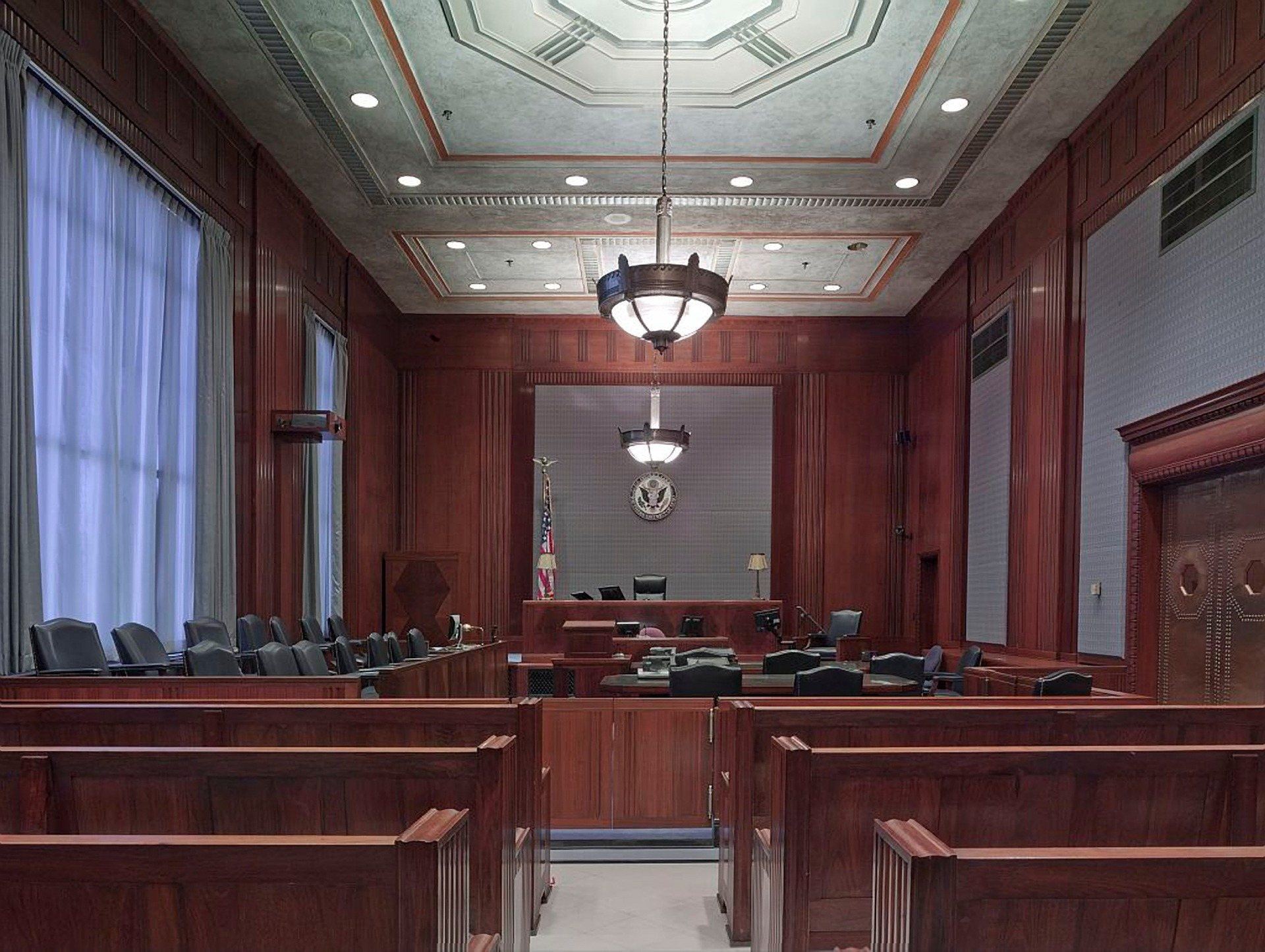
A teenage girl broke down in tears inside a crowded courtroom after receiving an 86-year prison sentence following her conviction in a violent robbery case that left several victims traumatized. The unusually lengthy punishment followed prosecutors’ claims that a planned robbery quickly escalated into a dangerous series of offenses.
According to the case presented during the proceedings, the teenager and several other individuals allegedly targeted victims intending to steal money and valuables. What was expected to take only minutes reportedly became far more serious after threats were made and weapons were displayed. Multiple people were placed in danger, leading prosecutors to pursue several charges connected to the incident.
At sentencing, the teenager appeared in court wearing a blue jail uniform. She initially remained composed as the judge began announcing the punishments for the individual offenses. However, her reaction changed as the sentences were added together. When the combined punishment reached 86 years, she reportedly began crying and turned toward her attorney in disbelief.
Her defense lawyer argued that her young age should be considered and asked the court to provide an opportunity for rehabilitation and a future beyond prison. Prosecutors, however, emphasized the seriousness of the offenses and the lasting emotional impact on the victims. They argued that substantial punishment was necessary.
The judge ultimately imposed consecutive sentences, resulting in the extraordinary 86-year prison term.

The ruling means that actions committed while the defendant was still a teenager could shape nearly her entire adult life. The emotional courtroom scene highlighted the consequences that can follow when a planned crime escalates into violence.
As she was escorted from the courtroom, she remained visibly emotional. The case serves as a powerful reminder of how quickly criminal decisions can become life-changing consequences, affecting not only defendants but also victims, families, and entire communities for years to come.
 Marcus Reed
When I told people I was getting married, I knew they would have questions. What I didn’t expect was the silence that followed when they found out who it was. My stepdad. The man who had been part of my life for years—but never in the way people immediately assumed. And that’s what made everything so complicated. Because the truth wasn’t what it looked like from the outside.
He came into my life when I was already grown. My mom met him late, long after I had moved out and started building my own life. To me, he was never a father figure in the traditional sense—just someone kind, steady, and unexpectedly understanding. We didn’t grow up together. We met as two adults, navigating life from completely different directions.
Over time, something shifted. Conversations got deeper, time together felt easier, and what started as simple respect slowly turned into something neither of us planned. We fought it at first. Ignored it. Tried to put distance between us. But the more we stepped away, the more obvious it became that this wasn’t something temporary or confused—it was real, and it wasn’t going away.
The day we decided to get married wasn’t dramatic. It was quiet, almost calm. We knew people wouldn’t understand. Some walked away completely. Others judged without asking a single question. But for us, it wasn’t about proving anything—it was about choosing a life that felt honest, even if it didn’t fit what others expected.
And today, when he looks at me and hands me something as simple as a morning coffee or a small gift, it doesn’t feel strange—it feels earned. Not because of what we are on paper, but because of everything we had to face to get here. Because sometimes, the hardest relationships to explain… are the ones that mean the most.
 Adrian Kim
Denzel Washington’s Extraordinary Career Has Made Him a Hollywood Legend
From powerful dramas and courtroom stories to action thrillers and emotional performances, Denzel Washington has built a career defined by remarkable range and influence. Whether commanding a scene with a powerful speech or delivering quiet emotion, he has repeatedly demonstrated an ability to connect with audiences.
Before becoming one of Hollywood’s most respected leading men, Washington developed his craft through theater and television. Those experiences shaped the discipline and intensity that later became central to his screen performances. He learned to understand characters deeply and bring authenticity to every role.
Throughout his career, Washington has taken on many different characters. He has portrayed determined professionals, troubled individuals, inspiring leaders, and complex figures. His performances often combine strength with vulnerability, allowing audiences to see their humanity.
His work has earned major acting awards for his contribution to cinema. His screen presence has made difficult stories feel personal, powerful, and unforgettable.
His influence also extends beyond trophies and box-office success. Washington has become an example of consistency, professionalism, and dedication to his craft.
What makes his career memorable is his ability to remain compelling across generations. Younger audiences continue discovering his classic performances, while longtime fans revisit the performances that established his reputation.
Denzel Washington’s legacy is about more than individual movies. It represents decades of storytelling, discipline, and artistic excellence. His presence on screen has influenced performers and entertained millions of viewers around the world.
Today, looking back at his remarkable journey, the description “Hollywood legend” feels entirely fitting. From early television and theater work to his celebrated film career, Washington has created a body of work that continues to inspire, challenge, and move audiences. His career demonstrates how talent, preparation, and dedication can create an enduring place in entertainment history.
 Samir Shah
She was deemed unfit for marriage.
They said I’d never get married. In four years, twelve men looked at my wheelchair and walked away. But what happened next shocked everyone, including me.
My name is Elellanar Whitmore, and this is the story of how I went from being rejected by society to finding a love so powerful it changed history itself.
Virginia, 1856. I was 22 and considered defective goods. My legs had been useless since I was 8. A horseback riding accident had shattered my spine and trapped me in this mahogany wheelchair my father had commissioned.
But here’s what no one understood. It wasn’t the wheelchair that made me unfit for marriage. It was what it represented. A burden. A woman who couldn’t be with her husband at parties. A person who, presumably, couldn’t have children, couldn’t manage a household, couldn’t fulfill any of the duties expected of a Southern wife.
Twelve marriage proposals arranged by my father. Twelve rejections, each more brutal than the last.
“She can’t walk down the aisle.” “My children need a mother to chase them.” “What’s the point if she can’t have children?” This last rumor, completely false, spread like wildfire through Virginia society. A doctor began speculating on my fertility without even examining me. Suddenly, I wasn’t just disabled. I was defective in every way that mattered to America in 1856.
When William Foster, a fat, drunken fifty-year-old, rejected me despite my father’s offer of a third of our estate’s annual profits, I knew the truth. I would die alone.
But my father had other plans. Plans so radical, so shocking, so completely outside of all social norms that, when he told me, I was certain I’d misunderstood.
“I’m entrusting you to Josiah,” he said. “The blacksmith. He’ll be your husband.”
I stared at my father, Colonel Richard Whitmore, owner of 5,000 acres and 200 enslaved people, certain he had lost his mind.
“Josiah,” I whispered. “Father, Josiah is enslaved.”
“Yes, I know exactly what I’m doing.”
What I didn’t know, what no one could have predicted, was that this desperate solution would turn into the greatest love story I would ever experience.
First, let me tell you about Josiah. They called him the brute. He was seven feet ten, or even less than an inch tall. 300 pounds of pure muscle, the product of years spent at the forge. Hands capable of bending iron bars. A face that made even the biggest men recoil when he entered a room. Everyone was terrified of him. Slaves and freemen alike kept their distance. White visitors to our plantation would stare at him and whisper, “Did you see how big he is? Whitmore has created a monster in the forge.”
But here’s what no one knew. Here’s what I was about to find out. Josiah was the kindest man I’d ever met.
My father called me into his study in March 1856, a month after Foster’s refusal. A month after I had stopped believing I would ever be different on my own.
“No white man will marry you,” she said bluntly. “That’s the reality. But you need protection. When I die, this inheritance will go to your cousin Robert. He’ll sell everything, give you a pittance, and leave you dependent on distant relatives who don’t want you.”
“Then leave me the estate,” I said, even though I knew it was impossible.
“Virginia law doesn’t allow it. Women can’t inherit independently, especially not…” He pointed to my wheelchair, unable to finish his sentence. “So what do you suggest?”
“Josiah is the strongest man on this estate. He’s intelligent. Yes, I know he reads secretly. Don’t look so surprised. He’s healthy, capable, and, from what I’ve heard, kind despite his size. He won’t abandon you because he’s legally obligated to stay. He’ll protect you, provide for you, take care of you.”
The logic was terrifying and flawless.
“Did you ask him?” I insisted.
“Not yet. I wanted to tell you before.”
“What if I refuse?”
At that moment, my father’s face aged ten years. “Then I’ll continue to look for a white husband, we’ll both know I’ll fail, and you’ll spend your life after my death in boarding houses, dependent on the charity of relatives who consider you a burden.”
He was right. I hated that he was right.
“Can I meet him? Talk to him before making this decision, for both of our sakes.”
“Sure. Tomorrow.”
The next morning they brought Josiah home. I was standing near the living room window when I heard heavy footsteps in the hall. The door opened. My father entered, and then Josiah bent down—really bent down—to fit through the door.
My God, he was enormous. Six feet ten inches of muscle and curvaceousness, shoulders barely touching his frame, hands marked by forge burns that seemed capable of shattering stone. His face was weathered, bearded, and his eyes darted around the room, never resting on me. He stood with his head bowed slightly, his hands clasped, the posture of a slave in a white man’s home.
That brute was a fitting nickname. He looked like he could demolish the house with his bare hands. But then my father spoke.
“Josiah, this is my daughter, Elellaner.”
Josiah’s eyes rested on me for half a second, then returned to the floor. “Yes, sir.” His voice was surprisingly soft, deep, yet soft, almost gentle.
“Ellaner, I explained the situation to Josiah. He understood that he would be responsible for your care.”
I managed to speak, even though I was shaking. “Josiah, do you understand what my father is proposing to me?”
Another quick glance at me. “Yes, miss. I will be your husband, I will protect you, I will help you.”
“And you agreed to this?”
He looked confused, as if the concept that her consent might matter was foreign to him. “The colonel said I should, miss.”
“But do you really want it?”
The question took him by surprise. His eyes met mine. Dark brown, surprisingly gentle for such a fearsome face. “I… I don’t know what I want, miss. I’m a slave. Usually what I want doesn’t matter.”
The honesty was brutal and ruthless at the same time. My father cleared his throat. “Perhaps you should talk in private. I’ll be in my study.”
He left, closing the door and leaving me alone with a seven-foot-tall slave man who was supposedly my husband. Neither of us spoke for what seemed like hours.
“Do you want to sit down?” I finally asked, pointing to the chair in front of me.
Josiah looked at the delicate piece of furniture with its embroidered cushions, then at her imposing figure. “I don’t think that chair would hold me, miss.”
“So, the sofa.”
He sat carefully on the edge. Even sitting, he towered over me. His hands rested on his knees, each finger like a small club, marked with scars and calluses.
“Are you afraid of me, miss?”
“Should I be?”
“No, miss. I would never hurt you. I swear.”
“They call you the brute.”
He winced. “Yes, miss. Because of my size. Because I look scary. But I’m not brutal. I’ve never hurt anyone. Not on purpose.”
“But you could if you wanted to.”
“I could.” He looked me in the eye again. “But I wouldn’t. Not with you. Not with anyone who doesn’t deserve it.”
Something in his eyes – sadness, resignation, a sweetness that didn’t suit his appearance – made me make a decision.
“Josiah, I want to be honest with you. I don’t want this any more than you probably do. My father is desperate. I’m not a good match for marriage. He thinks you’re the only solution. But if we’re going to do this, I need to know. Are you dangerous?”
“No, miss.”
“Are you cruel?”
“No, miss.”
“Are you going to hurt me?”
“Never, Miss. I swear it on everything I hold sacred.”
His sincerity was undeniable. He truly believed what he said.
“So I have another question. Can you read?”
The question took him by surprise. A flash of fear crossed his face. Reading was illegal for slaves in Virginia. But after a long moment, he said softly, “Yes, miss. I taught myself. I know it’s not allowed, but I… I couldn’t help it. Books are gateways to places I’ll never visit.”
“What are you reading?”
“Whatever I can find. Old newspapers, sometimes books I borrow. I read slowly. I haven’t learned well, but I read.”
“Have you ever read Shakespeare?”
His eyes widened. “Yes, miss. There’s an old copy in the library that no one touches. I read it last night, when everyone’s asleep.”
“What plays?”
“Hamlet, Romeo and Juliet, The Tempest.” His voice grew enthusiastic despite himself. “The Tempest is my favorite. Prospero controlling the island with magic. Ariel longing for freedom. Caliban treated like a monster, yet perhaps more human than anyone else.” He stopped abruptly. “Excuse me, miss. I’m talking too much.”
“No,” I said, smiling. I was smiling genuinely for the first time in this strange conversation. “Keep talking. Tell me about Caliban.”
And something extraordinary happened. Josiah, the enormous slave known as the Brute, began discussing Shakespeare with an intelligence that would have impressed university professors.
Caliban is called a monster, but Shakespeare shows us that he was enslaved, his island stolen, his mother’s magic ignored. Prospero calls him a savage, but Prospero has arrived on the island and claimed ownership of everything, including Caliban himself. So who is the real monster?
“Do you consider Caliban a character you can empathize with?”
“I see Caliban as a human being, treated as less than human, but still human.” His voice trailed off. “Like… like slaves.”
“I finished.”
“Yes, miss.”
We talked for two hours about Shakespeare, books, philosophy, and ideas. Josiah was self-taught; his knowledge was fragmentary, but his mind was sharp, his thirst for knowledge evident. And as we talked, my fear melted away.
This man was no brute. He was intelligent, kind, thoughtful, trapped in a body that society viewed and saw only as a monster.
“Josiah,” I said finally, “if we do this, I want you to know something. I don’t think you’re a brute. I don’t think you’re a monster. I think you’re a person stuck in an impossible situation, just like me.”
Her eyes suddenly filled with tears. “Thank you, miss.”
“Call me Elellanar. When we’re alone, call me Elellanar.”
“I shouldn’t, miss. It wouldn’t be appropriate.”
“Nothing in this situation is fair. If we’re going to be husband and wife, or whatever this arrangement is, you should use my last name.”
He nodded slowly. “Elellanar.” My name and his deep, gentle voice rang out like music.
“Then you should know something too. I don’t think you’re unfit for marriage. I think the men who rejected you were fools. A man who can’t see beyond the wheelchair, to see the person inside, doesn’t deserve you.”
It was the kindest thing anyone had said to me in four years.
“Will you do it?” I asked. “Will you accept my father’s plan?”
“Yes,” he replied without hesitation. “I will protect you. I will take care of you. And I will try to be worthy of you.”
“And I’ll try to make the situation bearable for both of us.”
We sealed the deal with a handshake, his enormous hand engulfing mine, warm and surprisingly gentle. My father’s radical solution suddenly seemed less impossible.
But what happened next? What I learned about Josiah in the months that followed. That’s when this story takes an unexpected turn.
The agreement formally came into force on 1 April 1856.
My father performed a small ceremony, not a legal wedding since slaves were not allowed to marry, and certainly not one that white society would recognize, but he gathered the servants, read some Bible verses, and announced that Josiah would henceforth take care of me.
“Speak with my authority regarding Eleanor’s welfare,” my father told everyone present. “Treat her with the respect her position deserves.”
A room adjacent to mine was prepared for Josiah, connected by a door but separate, so as to maintain a semblance of decorum. He moved his few personal effects from the slave quarters there: a few clothes, some secretly accumulated books, the tools from the forge.
The first few weeks were awkward. Two strangers trying to navigate an impossible situation. I was used to having housekeepers. He was used to heavy labor. Now he was responsible for intimate tasks. Helping me get dressed, carrying me when the wheelchair didn’t work, attending to needs I’d never imagined discussing with a man.
But Josiah handled everything with extraordinary sensitivity. When he had to pick me up, he asked permission first. When he helped me dress, he averted his gaze whenever possible. When I needed help with personal matters, he preserved my dignity even when the situation was intrinsically indecent.
“I know it’s an uncomfortable situation,” I told him one morning. “I know you didn’t choose it.”
“Neither do you.” He was reorganizing my bookshelf. I’d mentioned wanting it alphabetized, and he’d taken on the task. “But we’re managing.”
“Are we?”
He looked at me, his imposing figure somehow nonthreatening as he knelt beside the bookshelf. “Ellaner, I’ve been a slave all my life. I’ve worked grueling labor in heat that would kill most men. I’ve been whipped for my mistakes, sold and cast out by my family, treated like a voiced ox.” He gestured around the comfortable room. “Living here, caring for someone who treats me like a human, having access to books and conversation… This isn’t suffering.”
“But you’re still a slave.”
“Yes, but I’d rather be a slave here with you than free but lonely somewhere else.” He went back to reading his books. “Is it wrong to say that?”
“I don’t think so. I think he’s sincere.”
But here’s what I didn’t tell him. What I still couldn’t admit to myself. I was starting to feel something. Something impossible. Something dangerous.
By the end of April, we’d settled into a routine. In the morning, Josiah would help me with the preparations, then take me to breakfast. Afterwards, he’d return to the forge while I took care of the household accounts. In the afternoon, he’d return and we’d spend time together.
Sometimes I watched him work, fascinated by how he transformed iron into useful objects. Sometimes he read to me, and his reading improved significantly thanks to access to my father’s library and my private lessons. In the evenings we talked about everything: his childhood on another plantation, his mother who had been sold when he was ten, and his dreams of freedom that seemed unattainable.
And I talked about my mother, who died when I was born. About the accident that paralyzed me, about the feeling of being trapped in a body that didn’t work and in a society that didn’t want me. We were two outcasts who found comfort in each other’s company.
In May, something changed. I had watched Josiah work at the forge, heating the iron until it was red hot, then shaping it with precise strokes.
“Do you think I could try?” I asked suddenly.
He looked up in surprise. “Try what?”
“The work of forging. Hammering something.”
“Eleanor, it’s hot and it’s dangerous and—”
“—and I’ve never done anything physically demanding in my life because everyone thinks I’m too fragile, but maybe with your help I could.”
He looked at me for a long time, then nodded. “Good, now I’ll fix it safely.”
He placed my wheelchair next to the anvil, heated a small piece of iron until it was workable, placed it on the anvil, and then gave me a lighter hammer.
“Hit right there. Don’t worry about the force. Just feel the metal move.”
I struck a blow. The hammer hit the iron with a soft thud. It barely left a mark.
“Again. Put your back to it.”
I hit harder. Better hit. The iron bent slightly.
“Good. Again.”
I hammered repeatedly. My arms burned. My shoulders ached. Sweat poured down my face. But I was doing physical labor, shaping the metal with my own hands. When the iron cooled, Josiah lifted the slightly bent piece.
“Your first project. It’s not much, but you did it.” He put down the iron. “You’re stronger than you think. You’ve always been strong. You just needed the right business.”
From that day on, I spent hours at the forge. Josiah taught me the basics: how to heat metal, how to hammer it, how to shape it. I wasn’t strong enough for heavy work, but I could make small objects: hooks, simple tools, decorative pieces.
For the first time in 14 years, since the accident, I felt physically capable of doing something. My legs didn’t work, but my arms and hands did. And in the forge, that was enough.
But something else was happening, too. Something I couldn’t control.
June brought a different revelation. One evening we were in the library. Josiah was reading Keats aloud. His reading had improved to the point of understanding complex texts. His voice was perfect for poetry. Deep, resonant, capable of giving weight to every line.
“A thing of beauty is an eternal joy,” he read. “Its beauty increases. It will never fade into nothingness.”
“Do you really believe that?” I asked. “That beauty is eternal.”
“I believe that beauty in memory is eternal. The object itself may fade, but the memory of beauty remains.”
What’s the most beautiful thing you’ve ever seen?
She was silent for a moment. Then: “Yesterday at the forge, covered in soot, sweating, laughing as you hammered that nail. It was beautiful.”
My heart skipped a beat. “Josiah, I’m sorry. I shouldn’t have…”
“No.” I moved the wheelchair closer to where he was sitting. “Say it again.”
“You were beautiful. You are beautiful. You have always been beautiful, Elellanar. The wheelchair doesn’t change that. The broken legs don’t change that. You are intelligent, kind, brave, and, yes, physically beautiful.” Her voice grew prouder. “The twelve men who rejected you were blind idiots. They saw a wheelchair and stopped looking. They didn’t see you. They didn’t see the woman who learned Greek just because she could, who read philosophy for pleasure, who learned to forge iron despite having broken legs. They didn’t see any of this because they didn’t want to.”
I reached out and took his hand, his huge, scarred hand, capable of bending iron, but holding mine as if it were made of glass. “Do you see me, Josiah?”
“Yes, I see you all. And you are the most beautiful people I have ever met.”
The words were out of my mouth before I could stop them. “I think I’m falling in love with you.”
The silence that followed was deafening. Dangerous words. Impossible words. A white woman and a black man enslaved in Virginia in 1856. There was no room in society for what I felt.
“Ellaner,” he said carefully. “You can’t. We can’t. If anyone knew, they would…”
“What would they want? We already live together. My father already married me to you. What difference does it make if I love you?”
“The difference is safety. Your safety. My safety. If people think this arrangement is dictated by affection rather than obligation.”
“I don’t care what people think.” I stroked his face with my hand, reaching out to touch him. “I care what I feel. And for the first time in my life, I feel love. I feel someone sees me. Really sees me. Not the wheelchair. Not the disability. Not the burden. You see Ellanar. And I see Josiah. Not the slave. Not the brute. The man who reads poetry, creates wonderful things with iron, and treats me with more kindness than any free man has ever had.”
“If your father knew.”
“My father arranged everything. He brought us together. Whatever happens, it’s partly his fault.” I leaned forward. “Josiah, I understand if you don’t feel the same way. I understand it’s complicated and dangerous. Maybe I’m just lonely and confused. But I needed to tell you.”
He was silent for so long. I thought I’d ruined everything. Then: “I’ve loved you since our first real conversation. When you asked me about Shakespeare and actually listened to my answer. When you treated me like my thoughts mattered. I’ve loved you every day since then, Elellanar. I never thought I’d say that.”
“Say it now.”
“I love you.”
We kissed. My first kiss at 22, with a man who, according to society, shouldn’t have existed for me, in a library surrounded by books that would condemn what we were doing. It was perfect.
But perfection doesn’t last long in Virginia in 1856. Not for people like us.
For five months, Josiah and I lived in a bubble of stolen happiness. We were cautious, never showing affection in public, maintaining the facade of devoted protégé and designated guardian. But in private, we were simply two people in love.
My father either didn’t notice, or chose not to. He saw that I was happier, that Josiah was attentive, that the situation was working. He didn’t question the time we spent alone. The way Josiah looked at me, the way I smiled in his presence.
In those five months, we built a life together. I continued to learn the art of blacksmithing, creating increasingly complex pieces. He continued to read, devouring books from the library. We talked incessantly about our dreams of a world where we could be together openly, about the impossibility of those dreams, about how to find joy in the present despite the uncertainty of the future.
And yes, we became intimate. I won’t go into the details of what happens between two people in love. But I will say this: Josiah approached physical intimacy the same way he approached everything with me, with extraordinary sensitivity, attentive to my well-being, with a reverence that made me feel loved and not used.
By October, we had created our own world within the impossible space society had forced us into. We were happy in a way neither of us could have ever imagined possible.
Then my father discovered the truth and everything fell apart.
December 15, 1856. Josiah and I were in the library, lost in each other, kissing with the freedom of those who believe they are alone. We didn’t hear my father’s footsteps. We didn’t hear the door open.
“Elellaner.” His voice was icy.
We broke apart abruptly. Guilty. Exposed. Terrified. My father stood in the doorway, his expression a mixture of shock, anger, and something else I couldn’t quite decipher.
“Father, I can explain.”
“You’re in love with him.” Not a question, but an accusation.
Josiah immediately knelt down. “Lord, please. It’s my fault. I never should have…”
“Silence, Josiah.” My father’s voice was dangerously calm. He looked at me. “Elellanar, is it true? Are you in love with this slave?”
I could have lied. I could have claimed that Josiah had raped me, that I was a victim. It would have saved me and condemned Josiah to torture and death. I couldn’t.
“Yes, I love him and he loves me. And before you threaten him, know that the feeling is mutual. I was the one who initiated our first kiss. I was the one who sought this relationship. If you have to punish someone, punish me.”
My father’s face went through a series of expressions: anger, disbelief, confusion. Finally: “Josiah, go to your room immediately. Don’t come out until I send for you.”
“Gentleman-“
“No.”
Josiah left, casting me one last anguished look. The door closed, leaving me alone with my father. What happened next? My father’s words in that study changed everything, but not in the way I expected.
“Do you understand what you’ve done?” my father asked in a low voice.
“I fell in love with a good man who treats me with respect and kindness.”
“You fell in love with property, a slave. Elellaner, if this got out, you’d be ruined beyond repair. They’d say you were crazy, flawed, perverse.”
“They’re already saying I’m a problematic person and unsuitable for marriage. What’s the difference?”
“The difference is in protection. I gave you to Josiah to protect you, not… not for this.”
“Then you shouldn’t have brought us together.” I was screaming, years of frustration finally spilling out. “You shouldn’t have married me off to someone intelligent, kind, and sweet if you didn’t want me to fall in love with him.”
“I wanted you to be safe, not at the center of a scandal.”
“I’m safe. Safer than I’ve ever been. Josiah would rather die than let anyone hurt me.”
“And what will happen when I die? When the inheritance passes to your cousin? Do you think Robert will let you keep a slave husband? He’ll sell Josiah the very day I’m buried and lock you up in some institution.”
“Then release him. Release Josiah. Let’s go. We’ll go north. Will—”
“The North is not a promised land, Elellanar. A white woman with a black man, former slave or not, will face prejudice everywhere. Think your life is difficult now? Try living as an interracial couple.”
“I am not interested.”
“Well, yes. I’m your father, and I’ve spent your whole life trying to protect you, and I won’t let you get into a situation that will destroy you.”
“Being without Josiah will destroy me. Don’t you understand? For the first time in my life, I’m happy. I’m loved. I’m appreciated for who I am, not for what I can’t do. And you want to take all of that away from me because society says it’s wrong.”
My father sank into a chair, suddenly looking his full 56 years. “What do you want me to do, Ellanar? Bless him? Accept him?”
“I want you to understand that I love him, that he loves me, and that no matter what you do, that won’t change.”
Outside, silence reigned between us. The December wind rattled the windows. Somewhere in the house, Josiah waited to learn his fate.
Finally my father spoke, and what he said shocked me more than anything that had happened before. “I could sell him,” my father said softly. “Send him to the Deep South. Make sure I never see him again.”
My blood ran cold. “Father, please…”
“Let me finish.” He raised a hand. “I could sell it. That would be the right solution. Separate you. Pretend it never happened. Find you somewhere else.”
“Please don’t do that.”
“But I won’t.” A glimmer of hope flashed in my chest. “Father?”
“I won’t do it because I’ve watched you these past nine months. I’ve seen you smile more in nine months with Josiah than in the previous fourteen years. I’ve seen you become confident, capable, happy. And I’ve seen the way he looks at you, as if you were the most precious thing in the world.” He rubbed his face, suddenly looking ancient. “I don’t understand it. I don’t like it. It goes against everything I was raised to believe. But…” He paused. “But you’re right. I brought you together. I created this situation. Denying that you would form a genuine connection was naive.”
“So, what are you saying?”
“I’m saying I need time to think, to find a solution that won’t leave you both unhappy or destroyed.” He stood up. “But Elellanar, you have to understand. If this relationship continues, there’s no place for it in Virginia, in the South, maybe anywhere. Are you ready to face that reality?”
“If it means being with Josiah, yes.”
He nodded slowly. “Then I’ll find a way. I don’t know what it is yet, but I’ll find a way.”
He left me in the library, my heart pounding, hope and fear clashing inside me. Josiah was called back an hour later. I told him what my father had said. He slumped into a chair, overwhelmed.
“He has no intention of selling me. He has no intention of selling you. He will help us.”
“How can we help you?”
“He said he would try to find a solution.”
Josiah ran his hands through his hair and cried, deep, trembling sobs of relief and disbelief. I held him as tightly as I could from my wheelchair, and we clung to the fragile hope that maybe, somehow, my father could make the impossible possible.
But none of us could have predicted what would happen next. My father’s decision two months later would change not only our lives, but history itself.
My father pondered for two months. Two months during which Josiah and I lived in anxious uncertainty, awaiting his decision. We continued with our routines—working at the forge, reading, talking—but everything seemed temporary, contingent on whatever solution my father had in mind.
At the end of February 1857, he called us both into his study.
“I’ve made my decision,” he said without preamble. We were sitting across from each other, me in my wheelchair, Josiah perched on one of the two chairs, both holding hands despite the inappropriateness of the situation.
“There’s no way this will work in Virginia or anywhere else in the South,” my father began. “Society won’t accept it. The laws explicitly forbid it. If I keep Josiah here, even if I declare him your protector, suspicions will grow. Sooner or later someone will investigate, and you’ll both be ruined.”
My blood ran cold. It seemed like the prelude to a separation.
“So,” he continued, “I offer you an alternative.” He looked at Josiah. “Josiah, I will release you legally, formally, with papers that will be valid in any court in the North.”
I couldn’t breathe.
“Elellaner, I will give you $50,000, enough to start a new life, and I will provide you with letters of introduction to abolitionist contacts in Philadelphia who can help you get settled there.”
“Are you… are you freeing him?”
“Yes. What if we went north together?”
“YES.”
Josiah made a sound, half sob, half laugh. “Lord, I don’t… I can’t.”
“You can. And you will.” My father’s voice was firm, but not unkind. “Josiah, you protected my daughter better than any white man could have. You made her happy. You gave her confidence and abilities I thought she’d lost forever. In return, I give you freedom and the woman you love.”
“Father,” I whispered, tears streaming down my face. “Thank you.”
“Don’t thank me yet. It won’t be easy. There are abolitionist communities in Philadelphia that will welcome you, but you’ll still face prejudice. Elellanar, as a white woman married to a black man… Yes, married. I’m arranging a legal marriage before you leave. You’ll be ostracized by many. You’ll face economic, social, and perhaps even physical hardship. Are you sure you want that?”
“Safer than anything I’ve ever been.”
 Maya Chen
Two Red Cars Collide in Road Accident, Causing Major Traffic Disruption
A serious road accident involving two red cars has left a roadway covered with scattered debris and damaged vehicles. The collision appears significant, with one car suffering extensive damage while the other ended up near the roadside.
The scene shows the aftermath on a wet road beneath dark, cloudy skies. Both red vehicles are visibly damaged, and pieces from the cars can be seen across the roadway. Several people appear to be nearby, while other motorists approach the area carefully.
The exact circumstances surrounding the collision have not been established from the image alone. It would be inappropriate to assume what caused the incident without confirmed information from authorities. Weather conditions, road conditions, driver decisions, visibility, or mechanical issues can all contribute to unexpected traffic incidents.
The scene is a reminder of the importance of staying alert while driving. Wet roads can reduce traction and make it harder to stop quickly, particularly when vehicles are traveling too fast or following too closely. Keeping a safe speed, leaving enough space between vehicles, and paying attention to changing road conditions can help improve safety.
Drivers approaching an incident like this should slow down and remain cautious, especially when debris is present on the roadway. Sudden lane changes or distractions can create additional risks for everyone nearby.
While the damaged cars show that the collision was serious, the image alone cannot confirm whether anyone was injured or provide details about the incident. Those facts should come from reliable official sources.
For now, the most important message is simple: drivers should remain patient, focused, and careful whenever roads become wet or visibility changes. A moment of caution can make a difference on any journey, helping protect drivers, passengers, and others sharing the road.
 Elena Rossi
A Hidden Struggle Changed One Family’s Understanding Forever
The sound of breaking wood changed everything. One unexpected moment in the attic revealed something the family had never fully understood about the man they thought they knew. Instead of old memories and forgotten belongings, they discovered private writings that showed he had been quietly struggling for years.
The discovery was painful because he had worked hard to keep those feelings hidden. His family had always seen him as dependable and strong, but behind that image were difficult nights, emotional exhaustion, and thoughts he had never felt comfortable sharing.
When his wife finally confronted him, the conversation became deeply emotional. At first, he tried to dismiss what she had found and maintain the calm personality everyone recognized. Eventually, however, he could no longer hide how overwhelmed he felt. He opened up about his private struggles and admitted that he had been afraid of being judged or becoming a burden to the people he loved.
Instead of responding with anger, his family chose understanding. They realized that keeping painful emotions hidden had only made everything harder. Their home gradually became a place where difficult conversations were welcomed rather than avoided.
He continued attending therapy and began viewing professional support as a positive step instead of something to hide. His family also learned to ask meaningful questions and, more importantly, remain present when the answers were difficult.
The experience changed everyone’s perspective. They discovered that someone can appear confident and capable while privately carrying emotional challenges that others cannot see.
His story became a reminder that asking for support does not make someone weak. Sometimes, being honest about what you are experiencing can create an opportunity for healing, connection, and understanding.
What began with an unexpected discovery ultimately brought the family closer and taught them that genuine strength can include vulnerability, honesty, and the courage to seek help when needed.
 Amaya Brooks
Community Mourns the Loss of a Beloved Community Member
The sudden loss of a community member has left family, friends, and neighbors struggling to process news. Those who knew him are remembering a person whose kindness, reliability, and personality made a lasting impression on people around him.
Friends and loved ones have gathered to share memories and offer support to one another. They describe him as someone who was willing to help when needed and whose presence brought comfort and positivity to those who knew him.
His sense of humor and thoughtful nature are among the qualities people are remembering most. For many, moments shared with him have now become meaningful memories that they will carry forward.
News of an unexpected loss can affect an entire community, especially when someone has played a role in the lives of neighbors, friends, and relatives. During such moments, coming together can provide comfort and remind grieving families that they are not alone.
Those closest to him are now focusing on the memories he created rather than allowing the sadness of the moment to define his life. Every conversation, act of kindness, and shared experience has become part of the story people will remember.
The community’s response also highlights the importance of supporting one another during difficult times. A simple message, visit, or kind word can mean a great deal to someone dealing with loss.
While the circumstances surrounding his passing are not provided here, the memories shared by those who knew him paint a picture of someone who mattered deeply to the people around him.
His life will continue to be remembered through the stories, laughter, and moments shared by family and friends. Though his absence has created deep sadness, the kindness he showed others remains part of the lasting impact he leaves behind.


0 commentaires:
Enregistrer un commentaire