free webpage hit counter

Top Ad 728x90

samedi 24 octobre 2026

Breaking New: 13 Countries Join...see more

by

Breaking News: 13 Countries Join European Defence Cooperation as Governments Prepare for Growing Security Threats

European nations are stepping up military coordination, investing in modern defence capabilities, and strengthening cooperation amid concerns about Russia's war against Ukraine and the future of European security. But what does the involvement of 13 countries actually mean—and should the development be viewed as the creation of a new military alliance?

Across Europe, defence policy is undergoing a significant transformation. Governments that once focused primarily on maintaining their own national military capabilities are increasingly exploring ways to train together, share resources, develop advanced technologies, and prepare for potential security emergencies.

The shift reflects a changing strategic environment. Russia's full-scale invasion of Ukraine in February 2022 forced European leaders to reconsider assumptions about the continent's long-term stability. The conflict demonstrated the importance of ammunition supplies, air defence, drones, military logistics, intelligence, and the ability to sustain operations over an extended period.

Against this backdrop, headlines announcing that 13 countries have joined a defence initiative have attracted attention. The wording suggests a major development, but the specific headline does not identify the countries, the agreement, or the initiative involved.

There is, however, a documented development that closely matches the reference to 13 countries. In October 2025, NATO announced that 13 allied nations had agreed to begin developing a multinational simulated military training capability. The project was designed to make advanced training more accessible, improve cooperation between allied forces, and help prepare personnel for increasingly complex operational environments. <Link url="https://www.nato.int/en/news-and-events/articles/news/2025/10/15/nato-allies-cooperate-on-next-generation-training-capability" title="Read NATO's official announcement"/>.

Other multinational defence initiatives have followed, including projects involving missile defence, drones, and military aviation.

These developments are important, but they should not be confused with a declaration that 13 countries have formed a completely new military alliance or agreed to enter a war. The real story is about how existing partnerships are evolving to address changing security challenges.

Why European Governments Are Increasing Defence Cooperation

For decades, European countries have relied on a combination of national armed forces, NATO's collective defence framework, and cooperation with international partners to protect their territory.

The war in Ukraine has highlighted the importance of these arrangements while exposing gaps that individual countries cannot always address efficiently on their own.

Modern defence requires enormous investments. Air-defence systems, military aircraft, surveillance networks, ammunition production, cyber capabilities, and sophisticated training facilities can be expensive to develop and maintain.

When every country attempts to create every capability independently, resources may be duplicated and smaller nations can struggle to acquire the equipment they need.

Cooperation offers an alternative.

Countries can coordinate procurement, share technical expertise, establish common training standards, and develop systems that operate together. These arrangements may reduce costs, improve interoperability, and make it easier for allied forces to support one another during a crisis.

For example, a military aircraft operating alongside aircraft from another country must be supported by compatible communications, maintenance procedures, planning systems, and trained personnel. Similar requirements apply to missile defence, naval operations, and multinational exercises.

The objective is not simply to buy more equipment. It is to ensure that the equipment, personnel, and logistical systems can work together when circumstances demand it.

The 13-Nation NATO Training Initiative

One concrete example of this approach was announced by NATO on October 15, 2025.

Thirteen allies agreed to initiate the development of a Distributed Synthetic Training capability. The participating countries were Canada, Czechia, Denmark, Finland, France, Germany, Greece, Italy, the Netherlands, Norway, Spain, Türkiye, and the United Kingdom.

The initiative focuses on simulated military training.

Instead of requiring every exercise to take place on a physical training ground, participating forces can connect existing national simulation capabilities through a secure network. This can allow personnel in different locations to train together in realistic, computer-generated scenarios.

Such systems can help military units rehearse complex operations, practice coordination, and explore how they might respond to rapidly changing situations.

The advantages can be considerable. Large multinational exercises require substantial planning, transport, personnel, fuel, equipment, and access to suitable training areas. Simulated environments can supplement physical exercises while allowing forces to practice more frequently.

They can also create scenarios that would be difficult, expensive, or impractical to reproduce in the real world.

Importantly, the project was announced as a development initiative. It should not be interpreted as proof that all the systems are already operational or that every participating country has committed to an identical military role.

Instead, the agreement represents a step toward improving the way allied forces prepare to work together.

Why Military Training Matters More Than Ever

Modern military operations involve far more than individual soldiers or vehicles performing separate tasks.

Land, air, maritime, cyber, and space capabilities increasingly interact. A force may depend on satellite navigation, secure communications, intelligence from multiple sources, aerial surveillance, and coordinated logistical support.

If these systems cannot communicate effectively, even advanced equipment can become less useful.

Joint training helps identify those weaknesses before a real emergency occurs.

Personnel learn how different command structures operate, how information is shared, and how decisions can be coordinated under pressure. They can also discover where procedures need to be adjusted to improve efficiency.

Simulated training provides an additional advantage: it allows participants to repeat difficult scenarios without exposing personnel or expensive equipment to the same risks associated with live exercises.

That does not make physical training unnecessary. Soldiers and pilots still need hands-on experience, and real-world exercises remain essential. Digital systems are most valuable when they complement, rather than replace, practical preparation.

The 13-nation initiative therefore represents a practical effort to improve readiness through cooperation.

Its significance lies in the ability to prepare forces more efficiently—not in any suggestion that conflict is inevitable.

Missile Defence Becomes a Major Priority

Military training is only one part of Europe's broader defence efforts. Protecting populations and critical infrastructure against missiles and other aerial threats has also become a central concern.

Russia's attacks on Ukraine have demonstrated the destructive effects of missiles and drones against cities, energy infrastructure, transport networks, and military facilities.

European governments have consequently increased their focus on air and missile defence, including the sensors, interceptors, communications systems, and command networks needed to detect and respond to incoming threats.

In February 2026, NATO announced several new multinational capability projects. One involved seven allies—Belgium, Denmark, France, the Netherlands, Norway, Türkiye, and the United Kingdom—working together to strengthen defence against ballistic missiles.

The initiative aims to support the development, acquisition, and implementation of capabilities such as sensors, interceptors, and tactical control systems. <Link url="https://www.nato.int/en/news-and-events/articles/news/2026/02/12/nato-allies-launch-new-multinational-capability-cooperation-initiatives-expand-existing-projects" title="Read NATO's February 2026 defence announcement"/>.

The project illustrates how countries can coordinate their efforts in a technically demanding field.

No single defensive system can address every possible threat. Different missiles travel at different speeds and altitudes, while drones and aircraft present other detection and interception challenges.

A more integrated approach can help participating countries coordinate information and develop capabilities that complement one another.

However, missile defence remains technologically complex and costly. Cooperation does not guarantee that every threat can be intercepted, and the effectiveness of any system depends on its design, deployment, available resources, and operational circumstances.

The goal is to improve protection and preparedness—not to promise complete immunity from attack.

Drones Are Changing the Security Debate

Uncrewed aerial systems have become another important focus of defence planning.

Relatively inexpensive drones can perform surveillance, deliver supplies, disrupt operations, or carry weapons. More sophisticated systems can operate over longer distances and interact with other military capabilities.

The conflict in Ukraine has demonstrated how quickly drone technology can evolve and how rapidly armed forces may need to adapt.

For European countries, this creates two connected challenges: developing useful drone capabilities and protecting against hostile drones.

In February 2026, NATO announced a separate initiative involving Denmark, Lithuania, the Netherlands, Poland, and Türkiye to explore drone-based deep precision-strike capabilities.

The project focuses on developing and acquiring systems that can meet military requirements more efficiently, while also exploring ways to accelerate innovation and involve companies outside the traditional defence industry.

The initiative is distinct from the 13-country training agreement. It is another example of how different groups of allies are collaborating on specific military needs.

This distinction is important when interpreting headlines about countries joining defence initiatives. Different projects may involve different participants, objectives, and levels of commitment.

There is no single membership list that applies to every European defence project.

What Russia's War Against Ukraine Has Changed

Russia's full-scale invasion of Ukraine fundamentally altered Europe's security calculations.

Before the invasion, some European governments had reduced certain military capabilities or placed greater emphasis on other national priorities. The war highlighted the consequences of relying on assumptions that large-scale conventional conflict on the continent was unlikely.

Ukraine's experience has demonstrated the importance of ammunition production, equipment maintenance, resilient communications, air defence, battlefield intelligence, and the ability to replace damaged systems.

It has also highlighted the challenge of sustaining military operations over many months or years.

European governments have responded by increasing defence spending, supporting Ukraine, strengthening NATO's eastern flank, and exploring ways to expand their own industrial capacity.

These measures are not identical across the continent. Each country has its own geography, military requirements, political priorities, and budget constraints.

Countries closer to Russia may place particular emphasis on territorial defence and rapid reinforcement. Others may focus on air and maritime security, logistics, intelligence, or industrial production.

Multinational initiatives allow governments to combine these different strengths.

The broader aim is to make European defence more capable and resilient while preserving the existing security arrangements that underpin cooperation among allies.

NATO and the European Union Have Different Roles

Another source of confusion in defence reporting is the relationship between NATO and the European Union.

Although many countries belong to both organizations, they are not the same institution and do not have identical responsibilities.

NATO is a military alliance built around collective defence. Its members have committed to treating an armed attack against one or more allies as an attack against them all, as described in Article 5 of the North Atlantic Treaty.

The European Union, meanwhile, has its own defence cooperation initiatives, industrial policies, funding mechanisms, and security responsibilities. EU projects can help member states develop equipment, coordinate investments, improve military mobility, and strengthen the European defence industrial base.

These efforts can complement NATO, but they operate through different institutional frameworks.

For instance, the EU's Permanent Structured Cooperation framework supports collaborative defence projects among participating member states. Its projects cover areas such as military technology, training, maritime capabilities, and systems intended to improve operational readiness.

A country participating in one multinational project does not automatically become a member of another organization or acquire new obligations under every defence arrangement.

Understanding these distinctions helps readers assess what a particular announcement actually means.

Does Joining a Defence Initiative Mean War Is Coming?

The short answer is no.

Governments invest in defence for several reasons, including deterrence, crisis preparedness, protection of national territory, and the ability to respond if a threat materializes.

Military cooperation is intended to improve the options available to political leaders during a crisis. In principle, a credible defensive capability can help discourage aggression by making the potential costs of an attack higher.

But increased readiness does not prove that governments have decided a war is imminent.

There is a difference between preparing for a possible threat and predicting that the threat will occur. Defence planning generally involves examining multiple scenarios, including events that policymakers hope will never happen.

The same principle applies to military exercises. Training for a contingency does not necessarily mean that participants intend to initiate it.

Nevertheless, defence expansion can create diplomatic tensions, particularly when rival governments interpret military preparations as threatening. For that reason, clear communication, established international agreements, and diplomatic channels remain important.

Europe's current approach combines stronger military preparation with continued political efforts to manage risks and prevent wider conflict.

The Financial Cost of Greater Readiness

Building a stronger defence posture requires substantial investment.

New aircraft, missile systems, drones, ammunition, communications equipment, and training infrastructure can involve costs that extend well beyond the initial purchase.

Governments must also pay for personnel, maintenance, replacement parts, fuel, upgrades, and the facilities needed to keep equipment operational.

Cooperation may help reduce some of these costs, particularly when countries coordinate procurement or share development work. But multinational projects still require funding, sustained political commitment, and agreements about how systems will be maintained and used.

Defence spending also competes with other public priorities, including health care, education, transport, housing, and social services.

Governments therefore face a difficult balancing act: strengthening security while ensuring that spending remains sustainable and that public resources are allocated responsibly.

The economic benefits can include new jobs, research opportunities, and growth in advanced manufacturing. At the same time, defence contracts do not automatically guarantee efficiency or good value for money.

Transparency, oversight, and clear objectives are important if collaborative initiatives are to deliver the intended results.

What These Developments Mean for Ordinary Europeans

For most people, multinational defence agreements may seem distant from everyday life. Their effects, however, can reach beyond military bases and government offices.

Improved preparedness can help governments respond more effectively to security emergencies. Stronger infrastructure protection may reduce vulnerability to disruptions. Coordinated logistics and transport arrangements can help military personnel and equipment move more efficiently during a crisis.

Defence research can also contribute to technological development, although civilian benefits depend on how innovations are adapted and used.

Yet the public has legitimate questions about the costs and consequences of increased military investment.

Citizens may want to know how much governments are spending, whether new capabilities are necessary, how decisions are being scrutinized, and what diplomatic efforts are underway to reduce the likelihood of conflict.

Those questions are part of a healthy public debate. Supporting national security does not require accepting every announcement without examination.

A well-informed public should be able to distinguish between a real agreement, a proposal under discussion, a project still in development, and a headline that exaggerates the available facts.

What Happens Next?

The future impact of multinational defence cooperation will depend on how successfully governments turn agreements into operational capabilities.

A training network must be developed, tested, and maintained. Equipment projects require technical planning, funding, and procurement decisions. Military systems must be integrated into existing command structures and supported by trained personnel.

These processes can take years.

The number of participating countries is only one measure of progress. Other important questions include whether projects are delivered on time, whether they address genuine capability gaps, whether costs remain manageable, and whether the resulting systems work effectively together.

European governments are also likely to continue examining areas where collaboration could offer practical advantages, including air defence, drone technology, ammunition supplies, cyber resilience, space-based capabilities, and military mobility.

The challenge will be maintaining political cooperation across countries with different priorities while ensuring that new capabilities contribute to a coherent overall defence posture.

The Bottom Line: More Cooperation, Not a Declaration of War

The headline claiming that 13 countries have joined a new defence initiative reflects a broader and well-documented shift toward greater military cooperation in Europe.

A specific example is NATO's October 2025 agreement involving 13 allies to develop a multinational simulated training capability. Other initiatives have since addressed missile defence, drones, and military aviation.

These projects reflect the security challenges created by Russia's invasion of Ukraine and a wider reassessment of Europe's long-term defence needs.

But the evidence does not justify interpreting every such agreement as the formation of a new military alliance or proof that a wider war is about to begin.

The real significance lies in practical preparation: improving training, strengthening interoperability, coordinating investments, and ensuring that participating countries can respond more effectively to potential threats.

Europe's security environment remains complex, and no individual initiative can eliminate every risk. The success of these efforts will depend on sustained investment, effective implementation, political cooperation, and continued attention to diplomacy.

For readers encountering dramatic breaking-news headlines, one principle remains essential: identify the agreement, verify the participating countries, and examine the actual commitments before drawing conclusions.

The confirmed story is one of European governments working more closely on defence readiness—not evidence that a new war has been declared or that conflict is inevitable.

Joe Biden Hospitalized in Critical Condition

by

The words hit like a thunderclap: the President is in critical condition. Within minutes, the country’s most carefully guarded emergency plans roared to life

Markets shook, world leaders scrambled, and a stunned nation stared at flickering screens, desperate for answers.

In hushed tones, officials invoked the 25th Amend… Continues…

The sudden hospitalization of President Biden has plunged the United States into a rare moment of raw vulnerability,

yet also exposed the quiet strength of its constitutional design. As doctors fight for his recovery at Walter Reed, the machinery of government has shifted into its contingency posture, with

Vice President Harris poised to shoulder the responsibilities of Acting President. Inside the West Wing, routine has been replaced by a fragile, almost sacred

calm: staffers speaking in whispers, phones never silent, briefing papers rewritten by the hour. Outside, the country’s political

tribes have, if only briefly, lowered their banners, united in the simple human hope that a husband, father, and leader pulls through. Allies abroad are watching

not just for medical updates, but for proof that American institutions still hold under strain. For now, an anxious world waits, and the next update could redraw everything.

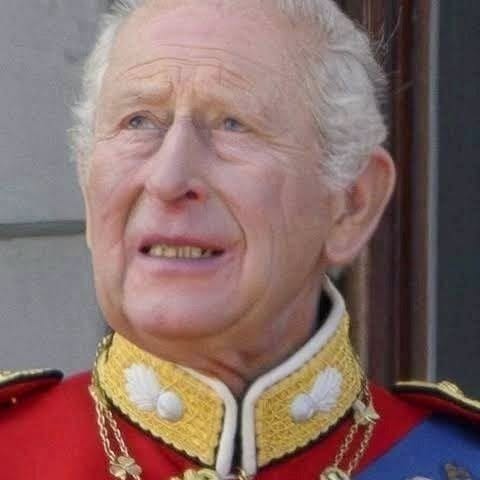
Buckingham Palace confirms the rumor, Charles III is…See more

by

Buckingham Palace and the Power of Royal Rumors: Why Official Confirmation Matters
Few institutions in the world attract as much public attention as the British monarchy. Every announcement, public appearance, and official statement is scrutinized by millions of people across the globe. As a result, rumors involving members of the Royal Family often spread rapidly across social media platforms, news websites, and online discussion forums. Recently, headlines claiming that “Buckingham Palace confirms the rumor” regarding King Charles III have circulated widely, prompting curiosity, concern, and speculation among  royal watchers.

The rapid spread of such headlines highlights a broader issue in modern media: the challenge of separating verified information from sensational claims. In an age where news travels faster than ever before, incomplete headlines and misleading posts can generate significant attention before readers have the opportunity to verify the facts. This phenomenon is especially common when stories involve prominent public figures such as King Charles III.

Royal family news

Buckingham Palace confirms the rumor, Charles III is…See more

The British monarchy occupies a unique position in public life. Beyond its constitutional role in the United Kingdom, the Royal Family represents centuries of history, tradition, and cultural identity. Because of this significance, developments involving the monarch often become matters of international interest. Whether the news concerns royal duties, public engagements, health updates, or major constitutional developments, people around the world pay close attention.

King Charles III assumed the throne following the death of Queen Elizabeth II, one of the longest-serving monarchs in British history. His accession marked the beginning of a new era for the monarchy. As king, Charles inherited not only the responsibilities of the Crown but also the intense public scrutiny that accompanies the role. Every speech, appearance, and decision is analyzed by commentators, journalists, historians, and members of the public.

Book Site Tours

This environment creates fertile ground for rumors. Social media platforms reward content that generates strong emotional reactions. Headlines designed to shock or surprise readers often receive more engagement than nuanced reporting. As a result, posts containing phrases such as “Buckingham Palace confirms,” “breaking news,” or “official announcement” can quickly gain traction even when the underlying information is incomplete or misleading.

Buckingham Palace confirms the rumor, Charles III is…See more

The importance of official communication cannot be overstated. Buckingham Palace serves as the primary source of information regarding the activities and status of the monarch. When significant developments occur, the Palace typically issues carefully prepared statements through official channels. These announcements are designed to provide accurate information while respecting privacy, protocol, and constitutional considerations.

Journalists covering the Royal Family generally rely on these official statements when reporting major news. Reputable news organizations verify information through multiple sources before publication. This process helps reduce the risk of misinformation and ensures that the public receives reliable updates. However, in the digital age, unofficial reports often spread faster than verified news, creating confusion among readers.

Police find girl missing since 2021: ‘She was n… See more

by

She was gone for years. No trace, no answers, only a family drowning in silence. Then came the call: she was alive. Rescued from “difficult” conditions, her return raised more questions than it answered. Behind the cameras, behind the hugs, there are secrets, scars, and a truth so heavy it could shat… Continues…

The day she came home did not feel real. Her parents’ faces carried the weight of every night they imagined the worst, every birthday with an empty chair, every time they rehearsed the words “if she ever comes back.” Now she was here, standing in their doorway, older but fragile, a living contradiction of relief and pain. The embrace that followed was desperate, wordless, and shaking, as if they were trying to hold together the broken years with their bare hands.

In the days after, the town moved quietly, almost reverently. Candles appeared on porches. Strangers left cards. Yet behind the gestures, a harder reckoning began. Investigators sifted through missed tips and overlooked warnings. Doctors mapped the damage that couldn’t be seen. Her family learned to speak in maybes and boundaries, loving her without demanding explanations. Healing, they discovered, was not a single moment of return, but a long, uncertain road they would walk together.

AI Predicts Winner Of 2028 Race Between JD Vance, Ocasio-Cortez

by

The 2028 presidential election is still more than two years away, but already there is much speculation about who will run, who will win each party’s nomination, and, of course, who will win the White House.

In a striking new electoral projection that should rattle Democratic ranks, a detailed analysis of the 2028 presidential map shows Vice President JD Vance defeating radical progressive Alexandria Ocasio-Cortez in a landslide, 339 electoral votes to a weak 199.

The prediction, released this week by popular election analyst “Election Time,” paints a devastating picture of what happens when Democrats nominate their most extreme voice: a historic wipeout worse than Michael Dukakis in 1988.

“Her nomination would be a dream come true for the GOP as she is by far the most beatable candidate Democrats could select,” the video’s author declared at the outset.

Market odds on Kalshi already give AOC a 68% chance of seeking the nomination after she publicly announced freezing her eggs—widely seen as clearing the deck for a White House run.

Yet the map makes clear that progressive purity is electoral poison.

Vance locks down a rock-solid base of 188 electoral votes in deep-red strongholds: Utah, Wyoming, Idaho, Montana, the Dakotas, Kansas, Oklahoma, Missouri, Arkansas, Louisiana, Mississippi, Alabama, Tennessee, Kentucky, West Virginia, Indiana, South Carolina, Alaska, plus the vast majority of Nebraska.

But the real story is the expansion.

“With AOC as his opponent, Vance is going to have a few additional states in his safe column,” the analyst noted.

Ohio, Vance’s home state, shifts to solid red after Trump’s 11-point 2024 romp. Iowa follows suit after 13-point margins.

Even Texas, once a competitive prize, returns to the solid column after Trump’s nearly 14-point win last cycle. “The vice president can no doubt improve upon Trump’s 2024 performance,” the narrator said.

AOC’s “solid blue” map is a disaster zone—just 98 electoral votes from the West Coast, Hawaii, Vermont, Massachusetts, Maryland, D.C., and Maine’s 1st District.

“She doesn’t even crack 100,” the analyst observed dryly.

Likely states only widen the gap. Florida, North Carolina, Arizona, and Maine’s 2nd District put Vance at 246 electoral votes—just 24 short of victory—while AOC scrapes by with Oregon, Colorado, a shrunken Illinois and New York, plus the Eastern Seaboard leftovers for 179.

“The main reason behind her poor performance is simply the fact that she’s too progressive,” the author explained.

“AOC is the obvious successor to Bernie Sanders… if she does end up winning the nomination, Democrats are going to push away a ton of moderates, basically handing Vance the swing states.”

The lean and tilt categories deliver the knockout. New Mexico and New Jersey give AOC a fragile edge to reach 198. Then the former Blue Wall collapses entirely.

Wisconsin, Michigan, and Pennsylvania—once Democratic fortresses—go lean red for Vance after consecutive Trump wins and decades of rightward drift.

“This rightward shift is not going to stop anytime soon,” the analyst warned. “The GOP is only going to do better and better in the Midwest in the coming years.

“As a result, Vance is going to sweep the entirety of the former blue wall,” said the analyst.

Minnesota, New Hampshire, and Virginia flip to tilt red. “Given Vance’s Midwestern appeal and AOC’s lack of any connection to the region, Minnesota is going to be a flip,” the narrator predicted, ending a 56-year Democratic streak.

Virginia, competitive since Glenn Youngkin’s 2021 win, becomes “the third flip on our map for the vice president.”

The final score: Vance 339, AOC 199. “J.D. Vance is on track to being elected the next president,” the author concluded.

“Meanwhile, AOC has still not crossed 200… the worst for any Democrat since Michael Dukakis in 1988, worse than both Clintons in 2016 and Harris’s in 2024.”

This is no fringe fantasy. It reflects hard data from recent elections, Hispanic shifts, Midwest realignment, and the fatal flaw of progressive overreach.

While Democratic elites cling to coastal strongholds and primary purity tests, American voters in the heartland are delivering a clear verdict: radicalism loses.

Trump filmed making ‘sordid’ move involving Natalie Harp as video goes viral and appears to catch president out

by

An onstage glance has ignited a storm around Donald Trump. At a rally, the president called aide Natalie Harp forward with a fuel order, then drew criticism for looking toward her as she left and making a game show comparison. Now, the footage is fueling arguments over what viewers saw—and what a camera cannot tell us about anyone’s inte… Continues…

The appearance was supposed to focus on fuel policy ahead of the midterms. Trump summoned Harp to deliver an executive order concerning the temporary use of dyed diesel intended for agriculture. After she handed it over, he looked toward her departure and remarked, “She reminds me [of], like, The Price is Right.” He followed with another television reference: “We should go on television with this show, right?” Critics online interpreted his glance as inappropriate, shifting attention from the policy announcement to his treatment of an aide.

Natalie Harp and Trump. Credit: Kevin Dietsch / Getty

Harp began working for Trump in 2022 and later became a presidential special assistant and executive assistant. Her work delivering printed materials earned her the nickname “human printer.” But professional proximity does not establish a romantic relationship, and a previously circulated image supposedly showing them kissing was identified as AI-generated. The criticism concerns his public behavior; the footage alone cannot substantiate speculation about their private lives.

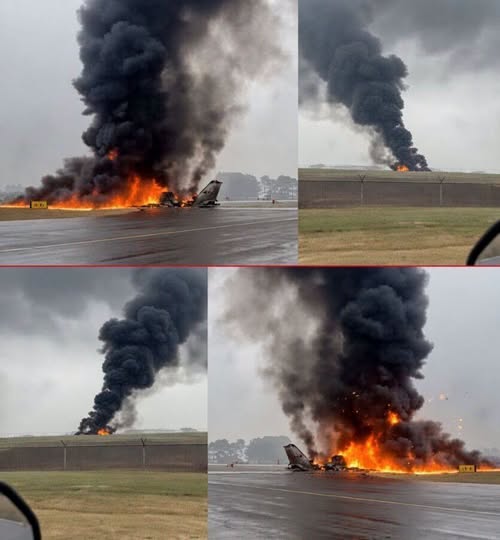
A Devastating Commercial Aviation Disaster Leaves More Than 244 Passengers Feared Dead As Rescue Crews Battle Flame And Time

by

A profound and deeply devastating tragedy has gripped the global community as breaking news confirms that a massive commercial passenger aircraft carrying more than 244 innocent people has violently crashed. First responders, local police units, and specialized emergency medical services are currently rushing to the impact zone in massive numbers, with regional authorities officially verifying the catastrophic event just moments ago. Stunned eyewitnesses located near the crash site described a truly horrifying and apocalyptic scene, recounting how immense plumes of thick, toxic black smoke and intense, roaring orange flames instantly billowed high into the afternoon sky, leaving nearby onlookers and local residents in a state of absolute shock, paralysis, and utter disbelief.

The commercial flight, the precise identification details and origin coordinates of which are still being frantically verified by aviation databases, suddenly plummeted from the sky under harrowing circumstances that currently remain entirely unclear to investigators. Prominent aviation experts, structural engineers, and accident analysts are already actively weighing in on the developing situation, suggesting that a sudden and catastrophic mechanical failure, severe and unmanageable localized weather patterns, or an immediate, uncommunicated instance of severe pilot distress could have each played a defining role in the aircraft’s rapid descent. Specialized search and rescue crews are currently battling fiercely against both the rapidly ticking clock and incredibly treacherous, challenging geographic terrain in the desperate, lingering hope of locating any miraculous survivors beneath the smoking wreckage, while all regional trauma centers and hospitals in the surrounding vicinity have been officially placed on the highest possible state of emergency alert.

Meanwhile, the deeply terrified families and loved ones of the passengers onboard are frantically awaiting any shred of official word regarding the status of the manifest, with deeply painful scenes of raw heartbreak and emotional collapse unfolding across transit terminals and arrival airports connected to the ill-fated journey. Public transportation officials and airline representatives have collectively stepped forward to promise a exhaustive, fully transparent federal investigation to determine precisely what systemic errors or malfunctions went wrong in the air, but in the agonizing interim, loved ones and shocked communities around the world can do nothing but cling to desperate hope for good news.

This tragic event is already being widely described by international media outlets as one of the most catastrophic and defining air disasters in recent memory. High ranking global leaders and international aviation safety authorities are expected to issue formal statements of condolence and administrative action within the hour, while major social media platforms have been completely flooded with millions of real time messages expressing profound prayers, deep international solidarity, and overwhelming collective grief. The entire world now watches the unfolding events with an anxious, heavy heart as the dangerous rescue efforts continue on the ground, praying fervently that amid the absolute structural devastation, rare and beautiful miracles of human survival can still somehow be found hidden within the debris.

Queen Camilla and the Meaning of a Royal Portrait

by

In that now-famous photograph, Queen Camilla is not the interloper of tabloid headlines, nor the shadow haunting a broken fairy tale. She stands beside King Charles III as an equal partner, shoulders squared, gaze steady, the weight of history resting on a woman once cast as its villain. The room around her is all gold, velvet, and ceremony, yet the tension comes from something quieter: acceptance that arrived not with applause, but with exhaustion.

Years of scandal, blame, and whispered comparisons did not vanish in an instant, but the image marked a turning point. People saw a survivor of public loathing who did not flinch. They saw a wife who stayed, a consort who learned, a woman who outlasted the story written about her. In that moment, Camilla was no longer just the controversy. She was the crown’s complicated, undeniable reality.

Royal portraits are designed to carry meaning beyond the people pictured. Clothing, posture, setting, and the placement of familiar symbols all contribute to a message about continuity and public duty. Yet viewers do not arrive at an image without memories of their own. They bring earlier headlines, loyalties, disagreements, and expectations that can make the same photograph seem reassuring to one person and uncomfortable to another.

That is the tension at the center of this account of Camilla. The article discusses an image and the public story surrounding it. It does not establish a new announcement from Buckingham Palace, despite the suggestive wording of the Facebook caption. Its subject is interpretation: what a formal appearance can represent after years of public controversy.

A portrait cannot settle every debate about a public figure. It freezes one carefully selected moment, while a life and a public role unfold over time. Seeing confidence in a pose is not the same as knowing the person’s private feelings. Seeing acceptance in a ceremonial setting is not evidence that every viewer has reached the same conclusion. The image invites an argument; it does not resolve it.

The source presents endurance as its central idea. It describes the distance between being defined by controversy and being recognized within an institution. That shift is not necessarily sudden, even when a photograph seems to crystallize it. Public familiarity can change gradually through repeated appearances, routine duties, and the passage of time. A single image may become a shorthand for a much longer process.

There is also a distinction between personal approval and recognition of a role. Someone can understand why a figure appears in a state portrait without agreeing with every part of the history associated with that figure. Public institutions regularly bring those different responses into the same room. Their symbols persist partly because they can accommodate more than one interpretation.

The article’s value lies in drawing attention to that complexity. Rather than treating the photograph as proof of an undisclosed development, it asks how visual ceremony interacts with memory. Camilla appears in the account as a person whose public image remains inseparable from a complicated narrative. The portrait may change the emphasis of that narrative, but it cannot erase the different experiences and judgments that viewers bring to it.

President Trump has to stop live speech as he rushed from podium after ‘medical emergency’

by

The cameras went black. Reporters started screaming. And in the Oval Office, a child collapsed at the President’s feet. Moments earlier, Trump was warning the world about Iran’s nuclear ambitions. Then chaos hit. Dr. Mehmet Oz vanished from the podium and sprinted toward his fallen child. His wife froze, eyes wide, shaking with ter… Continues…

In seconds, the scene shifted from scripted power to raw human panic. Secret Service agents sealed the room as Dr. Mehmet Oz dropped every trace of political formality and became only a father, working frantically over his child. Karoline Leavitt’s voice, usually sharp and controlled, broke as she cut the feed and ordered reporters out, leaving the nation staring at a sudden black screen and a hundred unanswered questions.

Outside, rumors raced faster than any official word. Was the child stable? Why did the White House go silent? And what did it mean that this happened in the middle of Trump’s dire warning about Iran and nuclear weapons? For a few surreal minutes, global threats, partisan fights, and political theater fell away. All that remained was a family in crisis, a country in suspense, and a silence that felt louder than any briefing.

Americas most beloved family have been involved in a …

by

According to early reports, the victims included pilot Larry Haynie and his wife Melissa, family assistant Melanie Hodges, her daughter Amber and Amber’s husband Nathan Kistler, as well as Jason and Kelly Nelon Clark—key members of the award-winning gospel group, The Nelons. The sole surviving member of the immediate family, Autumn Nelon Streetman, was not on the flight. In a deeply emotional statement, she thanked fans and friends for their prayers and support, describing her grief as “indescribable.”

The tragedy occurred as the group was en route to the Gaither Homecoming Cruise, a gospel music event in Alaska that was to feature some of the biggest names in Christian music. The Nelons were scheduled to perform, continuing their decades-long ministry of sharing hope and faith through song.

Witnesses described the horrifying scene as the aircraft, reportedly a twin-engine private plane, appeared to experience mechanical trouble before bursting into flames and crashing into a remote field in Wyoming. Despite the rapid response of emergency personnel, the wreckage was engulfed in fire by the time rescuers arrived. There were no survivors.

Trump Threatens to Target Iranian Energy Infrastructure If No Peace Deal!!@

by

President Donald Trump on Sunday threatened to ramp up operations against Iran’s energy infrastructure if the regime failed to reach an acceptable peace deal soon, though he also hinted that such a deal is in the offing. “The United States of America is in serious discussions with A NEW, AND MORE REASONABLE, REGIME to end our Military Operations in Iran,” Trump wrote on his Truth Social platform. “Great progress has been made but, if for any reason a deal is not shortly reached, which it probably will be, and if the Hormuz Strait is not immediately ‘Open for Business,’ we will conclude our lovely ‘stay’ in Iran by blowing up and completely obliterating all of their Electric Generating Plants, Oil Wells and Kharg Island (and possibly all desalinization plants!), which we have purposefully not yet ‘touched,’” he added. “This will be in retribution for our many soldiers, and others, that Iran has butchered and killed over the old Regime’s 47 year ‘Reign of Terror,’” Trump concluded.

Secretary of State Marco Rubio, meanwhile, said on Friday that U.S. military operations in Iran are expected to conclude within weeks as objectives are being met ahead of schedule. He made the remarks following meetings with foreign ministers from the Group of Seven nations in France. Rubio said the timeline aligns with earlier projections from President Donald Trump and administration officials, who indicated operations would last between four and seven weeks. “It’s a question of weeks, not months,” Rubio said when asked about the timeline, BBC reported. He added that the U.S. has received messages from Iran regarding possible negotiations but indicated uncertainty about who would represent Tehran.

“We’ve had an exchange of messages and indications from the Iranian system, whatever’s left of it, about a willingness to talk about certain things,” Rubio said. “We’re waiting for further clarification about who it is that we would be talking to, what we would be talking about, and when we will be talking,” he added.

Proposal and Negotiations

The comments come as the Trump administration has reportedly presented a 15-point proposal aimed at ending the conflict. Special envoy Steve Witkoff said he is “hopeful” talks could take place soon and that the proposal could resolve the war. “We have a 15-point deal on the table that the Iranians have had for a bit of time,” Witkoff said. “We expect an answer from them and it would solve it all.” Trump said Friday he has paused a potential strike on Iranian power infrastructure to allow space for negotiations. “Iran is being decimated,” Trump said, adding, “We are talking now. They want to make a deal.”

The conflict, which began on Feb. 28 with joint U.S. and Israeli operations, has resulted in the deaths of several senior Iranian leaders. Rubio said the U.S. has also deployed additional forces to the region to provide military options as the situation develops. Iranian officials have accused Israel of carrying out strikes on nuclear facilities and major industrial sites, including steel plants. Foreign Minister Abbas Araghchi warned Tehran would impose a “heavy price” in response.

Regional Tensions and Global Impact

Iran’s Islamic Revolutionary Guard Corps has threatened retaliation against infrastructure tied to the U.S. and Israel. The group said it could target industrial and energy-related assets across the region. The G7 nations called for restoring full navigation through the Strait of Hormuz, which Iran has moved to restrict. The waterway is a critical global energy route, with roughly 20% of the world’s oil and liquefied natural gas passing through it. Rubio said there are reports Iran has begun charging some vessels for safe passage through the strait. Iranian lawmakers are also reportedly considering legislation tied to those restrictions.

U S Army Captures a Boat Near Venezuela During a High Stakes Operation

by

For more than seven decades, Dolly Parton has remained one of the most recognizable and enduring figures in American popular culture. Few artists have managed to evolve so visibly, so deliberately, and so unapologetically over such a long career.

In recent years, renewed attention has been drawn to her changing appearance, prompting waves of commentary online. Yet focusing only on surface-level transformation misses the real story. Dolly Parton’s evolution has always been about control, creativity, and self-definition—not age, trends, or public opinion.

Born in a one-room cabin in rural Tennessee, Dolly was raised in extreme poverty as one of twelve children. Music was not a luxury in her household; it was a necessity. She began performing publicly before most children learn to write, appearing on local radio and television programs by the age of ten. Even then, she stood out—not just for her voice, but for her confidence. From the beginning, Dolly understood that presence mattered as much as talent.

By her teenage years, she was already writing songs with emotional depth and melodic instinct far beyond her age. After graduating high school, she moved to Nashville with a clear goal: make it in music on her own terms. That determination paid off in 1967 with the release of her debut album, Hello, I’m Dolly. From there, her rise was steady, not accidental. She built her reputation song by song, tour by tour, refusing to be boxed into the narrow expectations placed on women in country music at the time.

Her songwriting output is staggering. With more than 3,000 compositions to her name, Dolly has written classics that have transcended genre and generation. Songs like “Jolene,” “Coat of Many Colors,” and “I Will Always Love You” are not just hits—they are cultural landmarks. They have been covered endlessly, studied academically, and continue to generate relevance decades after their release.

Alongside her music, Dolly crafted an image that became just as iconic. Her towering blonde hair, dramatic makeup, and flamboyant wardrobe were never accidents. In the 1970s and 1980s especially, she leaned into a hyper-stylized look that challenged both country music conservatism and broader cultural norms. Critics mocked it. Fans loved it. Dolly didn’t care either way. She famously described her appearance as “costly trash,” making it clear she was in on the joke and fully in control of the narrative.

Photographs from the 1980s show her with heavily curled hair, exaggerated volume, and bold fashion choices that instantly identify the era. Those looks were widely copied, parodied, and remembered—not because they were subtle, but because they were fearless. She understood something many celebrities never do: if people are going to talk, give them something unforgettable to talk about.

As the decades passed, her career expanded rather than slowed. She crossed into pop music, dominated film and television, and became a box-office draw with roles in major Hollywood productions. She won multiple Grammy Awards, earned countless industry honors, and achieved a rare feat—remaining relevant without chasing trends. Her brand grew stronger precisely because it stayed consistent.

In recent years, attention has turned once again to her appearance. New photographs circulate online, often accompanied by sensational headlines marveling at how “different” she looks. The truth is simpler. Dolly has never pretended to age naturally, and she has never apologized for it. She has spoken openly about cosmetic procedures, wigs, makeup, and maintenance, treating them as tools, not secrets. For her, appearance is part of performance, and performance is part of joy.

What astonishes many observers is not that she has changed, but that she has changed exactly as she wants to. At an age when most entertainers fade quietly or retreat into nostalgia, Dolly remains active, visible, and creatively engaged. She continues to record new music, including ambitious projects that explore genres far outside traditional country. Her recent ventures into rock music have been met with critical praise, reinforcing what longtime fans already know: she is still pushing herself.

Beyond entertainment, her legacy has expanded into philanthropy and cultural leadership. Through her literacy initiatives, she has provided millions of free books to children worldwide. She has invested heavily in her home state, supporting education, disaster relief, and economic development. These efforts are not publicity stunts; they are sustained commitments spanning decades.

Dolly Parton’s transformation over the years is not a story about vanity or reinvention. It is a story about ownership. She has never allowed the public to decide who she should be, how she should look, or when she should stop. Every hairstyle, every costume, every evolution has been intentional. That consistency of purpose is why she remains admired across generations.

In a culture obsessed with youth and authenticity defined by minimalism, Dolly stands apart. She is artificial by design, sincere by nature, and remarkably honest about both. People remember her not just as a symbol of the 1980s or a country music legend, but as a woman who built a life, a career, and an image entirely on her own terms.

That is why she endures. Not because she refuses to change—but because she has always been exactly who she chose to be.

Bramnick Tells NJ Republicans to Condemn Trump’s Rhetoric as Omar Feud Escalates

by

The Republican state senator warned of more election losses while Trump demanded Ilhan Omar’s resignation and accused her of identity fraud.

TRENTON, NJ — State Sen. Jon Bramnick is calling on fellow New Jersey Republicans to condemn hateful and disrespectful language from President Donald Trump and other national Republicans, warning that the party risks further losses if it fails to change course.

Bramnick’s appeal comes as Trump intensifies his confrontation with Rep. Ilhan Omar, demanding that the Minnesota Democrat resign amid a federal investigation into her immigration history.

“I have tried for years to convince my fellow New Jersey Republicans to condemn hateful or disrespectful language coming from Trump or any other national Republican,” Bramnick wrote on X. “New Jersey Republicans should begin the process of repairing our brand or suffer more losses at the polls.”

Bramnick warns the party’s reputation is at stake

The senator’s statement challenged New Jersey Republicans to address the language used by their national leaders. His warning focused on the consequences for the party’s standing with voters.

Bramnick did not mention Omar in the post or identify a particular Trump statement. He described his effort to persuade Republicans to speak out as a campaign he has pursued “for years.”

His demand was direct: condemn the rhetoric and begin repairing the party’s reputation.

Trump demands Omar leave Congress

In his Truth Social post, Donald Trump alleged that Omar used a false name when she was elected and sworn into Congress. He cited the name “Ilhan Nur Said Elmi,” which appeared in a Justice Department filing, and presented it as evidence of fraud.

“Therefore, because she used a fake name to be sworn in, I assume she must IMMEDIATELY resign from Congress,” Trump wrote. “Please inform the Speaker of the House of Representatives, James Michael Johnson, that the Dumocrat Party has just conceded her seat.”

Trump continued: “Ilhan Nur Said Elmi, her real name, has openly admitted to FRAUD, and she will not be legally allowed to be a Member of this August Body from this point forth.”

Those were allegations made by the president. Omar maintains that her name is Ilhan Abdullahi Omar and has denied wrongdoing.

Trump also revived the allegation that Omar married her brother, a claim she has repeatedly denied.

Federal investigation adds to confrontation

The dispute follows an October 12 federal search of Omar’s Washington residence as investigators examine her immigration and citizenship history.

Omar has characterized the investigation as political intimidation. She has also said she plans to leave the residence because of safety concerns following the search.

Bramnick’s statement addressed the broader political fallout from national Republican rhetoric, warning his own party that its response could affect future elections in New Jersey.

The Trump administration has not responded the Bramnick’s statement. Bramnick has been an outspoken voice against the President for nearly a decade.

New Jersey, Politics, State News, National News, Government


Bradford Flaker pleaded guilty to child exploitation and luring charges after an undercover investigation led to his arrest at a Belmar park.

TRENTON, NJ — A Passaic County man who secretly recorded children in his bathroom and arranged to meet someone he believed was a 13-year-old girl has been sentenced to 20 years in state prison, Attorney General Jennifer Davenport announced.

Bradford Flaker, 43, of Hawthorne, previously pleaded guilty to first-degree manufacturing, distribution and possession of child sexual abuse or exploitation material, along with second-degree luring.

“He used a hidden camera to secretly record children, whose images he then shared with others,” Davenport said. “Finding and stopping sexual predators is always a priority of this office, and it always will be.”

Undercover conversation led to Belmar arrest

The investigation began May 21, 2025, when Flaker contacted a user on a mobile messaging app whom he believed was a 13-year-old girl. Authorities said the account belonged to a New Jersey State Police undercover officer.

Flaker told the officer he “liked young girls.” Their conversations moved to text messages after authorities banned his messaging app account.

During those exchanges, Flaker arranged a meeting at a park in Belmar and described plans to sexually assault the supposed child, prosecutors said. He stayed in contact with the officer while traveling to the park, where investigators arrested him.

Investigators uncovered recordings and chat logs

An examination of the banned account uncovered 115 videos and 12 images containing child sexual abuse material. Investigators also found chat logs indicating Flaker had placed hidden cameras in his home bathroom to record children.

Flaker later admitted the conduct underlying his guilty pleas, according to the Attorney General’s Office.

“Exploiting children is an abhorrent offense, and those who engage in such conduct must be held fully accountable under the law,” State Police Superintendent Jeanne Hengemuhle said.

The New Jersey Attorney General’s Office issued the following statement:

Bradford Flaker, 43, of Hawthorne, New Jersey, previously pleaded guilty to first-degree manufacturing child sexual abuse or exploitation material (CSAEM), first-degree distribution of CSAEM, first-degree possession of CSAEM, and second-degree luring.

“The 20-year prison term this defendant was sentenced to today reflects the gravity of his crimes,” said Attorney General Davenport. “He used a hidden camera to secretly record children, whose images he then shared with others. Finding and stopping sexual predators is always a priority of this office, and it always will be.”

“This prosecution is a prime example of the benefit of coordinated law enforcement efforts in this space,” said Interim DCJ Director Martha Nye. “We will use every enforcement tool available to us to pursue those will seek to abuse and exploit children and hold them accountable to the fullest extent of the law.”

“The defendant’s state prison sentence underscores the seriousness of these offenses, which involved the exploitation of minors and resulted in guilty pleas to multiple first‑ and second‑degree crimes,” said Jeanne Hengemuhle, Superintendent of the New Jersey State Police. “Exploiting children is an abhorrent offense, and those who engage in such conduct must be held fully accountable under the law. We will continue to use every investigative tool available to uncover these offenses and safeguard children across New Jersey. We remain resolute in our commitment to protecting children and pursuing justice for the most vulnerable members of our communities.”

On May 21, 2025, an individual using the online moniker “Flaker” contacted another user he believed to be a 13-year-old girl on a mobile messaging app; the 13-year-old girl was actually a New Jersey State Police undercover officer. Flaker indicated to the undercover officer that he “liked young girls.” The undercover officer communicated with Flaker by text message due to Flaker’s messaging app account being banned. An investigation into the banned account found 115 video files and 12 image files containing CSAEM. The investigation also revealed chat logs indicating Flaker placed hidden cameras in his bathroom to record children in the bathroom at his house.


A microplastics proposal would target certain cleaning supplies, cosmetics, chewing gum, tea bags and pet food, with labeling requirements followed by sales restrictions.

TRENTON, NJ — Everyday purchases ranging from chewing gum to household cleaners could face new warning labels and eventual sales restrictions under legislation introduced by New Jersey Democrats to reduce microplastic pollution.

First it was the plastic bags. Then it was plastic straws. Then it was the plastic utensils. Then it was gas powered cars, appliances and tools.

Now, Democrats are going big, banning many of the common products that are in home and probably in your pocket and pocketbook as you read this.

They even want to ban your morning cup of tea and coffee as it is now.

The “Protecting Against Microplastics Act” would prohibit sales of covered cleaning, cosmetic and potentially ingestible products containing intentionally added microplastics or capable of generating certain plastic particles. The restrictions would begin three years after enactment, giving manufacturers time to change affected products.

Sen. Linda Greenstein sponsors S4836, introduced October 15. Assemblywomen Shama Haider and Margie Donlon sponsor the identical Assembly measure, A5452. njleg.state.nj.us

Whether an individual item would face a sales ban depends on its ingredients and potential to generate microplastics. The legislation names product categories rather than specific brands.

Which household products would be affected?

The proposal explicitly identifies several familiar purchases and establishes broader categories that could cover additional products.

ProductWhy it falls within the proposalPotential effect
Chewing gumExplicitly included among “potentially ingestible” products. Gum containing intentionally added microplastics or generating covered particles would trigger the restrictions.Disclosure labels, followed by a sales ban for affected formulations.
Tea bagsExplicitly named. Bags incorporating plastic materials could fall under the provisions if they contain or generate the particles covered by the bill.Affected bags could require changes in materials to remain on sale.
Coffee groundsExplicitly listed as potentially ingestible. The restrictions would apply when the product meets the bill’s microplastics criteria.Labels and eventual sales restrictions for qualifying products.
Talcum powderExplicitly named, with the broader definition covering products capable of being inhaled or swallowed.Affected formulations could require replacement ingredients or removal from sale.
Pet foodExplicitly included in the potentially ingestible category.Products meeting the microplastics criteria would face labeling and sales restrictions.
Household cleaning productsCleaning products are a covered category when they contain intentionally added microplastics or could generate covered particles.Manufacturers could need to reformulate affected products.
Cosmetics and makeupCosmetics are expressly covered, including qualifying products applied to the face.Labels and eventual restrictions on affected formulations.
Other edible, facial-use or inhalable productsThe definition of potentially ingestible products extends beyond the examples specifically listed.Additional products could qualify depending on their composition and particle generation.
Foodware, including cups, plates, utensils, cutting boards, cookware and bakewareFoodware is explicitly included in the disclosure and labeling sections.Qualifying items would face labels; foodware is not separately listed in the three-year sales-ban provision.

The bill also exempts technically unavoidable trace quantities arising from ingredient impurities, manufacturing, storage or migration from packaging from triggering the sales prohibition.

Why lawmakers are targeting these products

The proposal seeks to reduce plastic particles entering the state’s air, water and soil while giving consumers information about potential exposure through everyday purchases.

It defines microplastics as synthetic polymer materials measuring five millimeters or less in diameter. Its reach also includes secondary microplastics — particles generated as larger plastic materials break down.

That distinction broadens the proposal beyond products manufactured with tiny plastic particles deliberately added. Covered products capable of generating those particles could also face restrictions.

The measure would fund research into contamination, exposure pathways and ways to reduce releases into the environment. SNN has also reported on New Jersey’s push for expanded monitoring of microplastics in drinking water.

Warning labels would come before sales restrictions

The proposed schedule runs from the date the legislation takes effect:

  • After one year: Manufacturers would disclose intentionally added microplastics or the potential to generate secondary microplastics on exterior product labels.
  • After two years: Additional labeling requirements would begin, including a statement in English and Spanish reading, “This product contains microplastics.” Required disclosures would also appear in online listings.
  • After three years: Sales restrictions would begin for qualifying cleaning, cosmetic and potentially ingestible products.

For shoppers, that could mean new packaging, reformulated products or changes in which versions retailers can sell. Compliant alternatives could remain available.

Proposal includes $3 million for research and enforcement

The legislation would appropriate $2.5 million to the Department of Environmental Protection for reduction programs, research and monitoring, plus $500,000 to the Department of Law and Public Safety.


A retired New Jersey parole captain is running with Jackson United while Mayor Jennifer Kuhn and Elliott Shem-Tov compete for Republican support.

JACKSON, NJ — Brandon Rose is hoping a divided Republican field gives Democrats an opening in Jackson Township, where the fight between Mayor Jennifer Kuhn and challenger Elliott Shem-Tov has dominated the mayoral campaign.

Rose, a Democrat running with Jackson United, is seeking to consolidate Democratic support while his opponents battle online and at township meetings. His approach puts a quieter campaign alongside a public struggle between competing Republican factions.

The numbers could work. Historically, in Jackson, 33% of voters vote for Democrats. 77% vote Republican, but that has been in head to head races. This year, a divide in the Republican party can open the door for a Democrat victory, and Rose is hoping the numbers fall in favor of himself and his team on election.

The November 3 municipal election is officially nonpartisan. Ocean County’s certified candidate list names Kuhn, Shem-Tov and Brandon A. Rose as the three mayoral candidates, with Paul Sarti and Casey V. Jackson running for council under the Jackson United slogan.

So far, their campaign has largely avoided the battle between the Republicans, but is focusing on letting Democrat voters know that there’s a viable third choice.

Republican divisions create an opportunity

Kuhn heads the ticket endorsed by Jackson’s Republican organization. Shem-Tov’s Fight for Jackson team includes Councilman Christopher Pollak and council candidate Amanda Trombetta.

Depending on how Republicans split in that election, Rose and his team could win if the race between Kuhn and Shem-Tov is close.

Their dispute has included sharp disagreements over township leadership, development and spending. Shem-Tov has publicly challenged the administration over the business administrator’s compensation package.

Rose’s team is presenting itself as another choice for residents frustrated with that conflict.

“We aim to provide an alternative option to the existing warring political factions,” Jackson United states in its campaign platform.

A split among Republican voters could help Rose compete, but his campaign still needs to turn Democratic support into votes and attract residents beyond its party base. He’s hoping Democrats will turn out this year.

Rose brings a career in parole supervision

According to his campaign biography, Rose has lived in Jackson for 16 years and grew up around the Jersey Shore. He graduated from Trenton State College, now The College of New Jersey, with a degree in law and justice.

After working in dining services management, he spent 26 years with the New Jersey Division of Parole. He retired in 2023 as a captain responsible for overseeing multiple district offices.

His background includes coordinating reentry efforts with government agencies, charities, faith organizations and businesses, along with participating in operations involving municipal, county, state and federal law enforcement.

Rose also completed the West Point Command and Leadership Program and earned a Certified Public Manager designation through the state and Fairleigh Dickinson University program.

Union experience and township priorities

Rose’s biography identifies him as a former vice president of the New Jersey Superior Officers Association and a vice president of the New Jersey Law Enforcement Commanding Officers Association. He also participated in collective bargaining negotiations with the Governor’s Office of Employee Relations.

Jackson United’s platform calls for greater transparency, responsible budgeting, consideration of Municipal Utilities Authority reforms and support for seniors and young families.

“Enforce all codes and ordinances equally and fairly,” the team pledges in its platform.

For Rose, the campaign offers a chance to bring his management and public service experience into township government while asking voters to look beyond the feud driving Jackson’s Republican politics.


Retired school resource officer John Pejoski is running for office after a police career built around school safety and relationships with students.

JACKSON, NJ — For years, Jackson students knew John “Pojo” Pejoski as the officer they could turn to when something went wrong. Now the retired school resource officer is seeking a Township Council seat, bringing that community connection into the November 3 election.

Pejoski is running with fellow council candidate Brian McCarron on the Republican organization’s endorsed ticket in Jackson, and he hopes his former students will come out on Election Day to help him win.

His background with the Jackson Police Department includes patrol work, nearly two decades in school resource assignments and leadership in youth substance abuse prevention.

Jackson students knew him as ‘pojo. ’ now he wants to be their councilman
Photo: jackson students knew him as ‘pojo. ’ now he wants to be their councilman

When he retired, it was a shock the entire community and heartbreaking to many of the students at Jackson Liberty High School. On his last day, he walked out of school to find that students plastered his patrol cruiser with sticky notes thanking him for all he did for them.

A sendoff written on hundreds of sticky notes

When Pejoski prepared to retire in March 2022, Jackson Liberty High School students decorated his patrol vehicle with hundreds of sticky notes. Across the windshield, they arranged the notes into an American flag.

SNN’s coverage of Pejoski’s retirement described an officer who helped students work through problems while keeping watch over the school. He joined the Jackson Police Department as a patrolman in 1997 and began school resource work in 2003.

His presence extended to sporting events and the school’s “red zone” student activities.

At the time, school board President Michael Walsh said Pejoski had “a tremendous connection with our students.”

Walsh also praised the school resource officers’ work “to protect, to educate and to connect with our school community.”

Police honors and prevention work

Pejoski’s retirement account listed recognition as Jackson PBA Member of the Year in 2004 and Police Services Division Officer of the Year in 2019. It also noted a School Resource Officer of the Month award from the National Association of School Resource Officers and service at Ground Zero following the September 11 attacks.

His work with young people also brought him before the governing body he now hopes to join.

Pejoski also served as chairman of the Jackson Municipal Alliance, and township records document his advocacy for maintaining substance abuse prevention funding and programs for schoolchildren.

That role involved prevention efforts beyond daily police assignments, connecting his school work with a broader township program.

Running on public safety and community services

The Republican organization’s endorsement of “Pojo” identified preserving open space, strengthening public safety and improving services for seniors and families as priorities for the Kuhn, McCarron and Pejoski ticket. Those are the slate’s stated goals.

Pejoski is one of six candidates competing for two council seats. Christopher Pollak and Amanda Trombetta are running with mayoral candidate Elliott Shem-Tov, while Paul Sarti and Casey V. Jackson are running with Brandon Rose’s Jackson United team.

For residents who knew him through Jackson’s schools, Pejoski enters the race with a familiar nickname and a public service record that predates his campaign.


Voters can cast ballots through November 1, vote by mail or head to their assigned polling place on Election Day, November 3.

TOMS RIVER, NJ — Early voting opens Saturday, October 24, at 10 locations across Ocean County, giving registered voters nine days to cast their ballots ahead of the November 3 general election.

Early voting sites operate from 10 a.m. to 8 p.m. Monday through Saturday and 10 a.m. to 6 p.m. Sunday, with the final day on November 1. Voters may use any early voting location within the county.

“Registered voters in Ocean County can cast a ballot at any of the early voting locations,” County Clerk John P. Kelly said. “For instance, if you live in Manahawkin but work in Toms River, you can cast your vote at the main branch of the Ocean County Library during early voting.”

The machines provide the ballot for each voter’s home municipality, Kelly said.

Where to vote early in Ocean County

The county’s 10 early voting locations are:

CommunityLocationAddress
BerkeleyBerkeley Township Library30 Station Road, Bayville
BrickBrick Township Library301 Chambers Bridge Road
JacksonJackson Township Library2 Jackson Drive
LaceyLacey Community Center, Room C, formerly the Knights of Columbus building15 East Lacey Road
LakewoodMunicipal Building courtroom231 Third Street
LavalletteUpper Shores Library112 Jersey City Avenue
Little Egg HarborLittle Egg Harbor Township Library290 Mathistown Road
StaffordOcean County Southern Service Center, nutrition hall179 South Main Street, Manahawkin
ManchesterManchester Township Library21 Colonial Drive
Toms RiverOcean County Library main branch101 Washington Street

Mail-in ballot application deadlines approaching

Voters requesting a mail-in ballot by mail face an October 27 application deadline. Registered voters can also apply online through the state’s voter information portal.

The deadline to apply for and obtain a mail-in ballot in person is 3 p.m. November 2 at the Ocean County Clerk’s Office, 118 Washington Street in Toms River.

Deputy County Clerk John Catalano said the office had issued 60,940 mail-in ballots as of October 15, including 23,868 to Democrats and 22,304 to Republicans. At that point, the Board of Elections had received 18,967 completed ballots.

Completed ballots may be mailed, deposited in an official ballot drop box or delivered to the Ocean County Board of Elections at 129 Hooper Avenue in Toms River.

Drop-box and hand-delivered ballots must arrive by 8 p.m. November 3. Mailed ballots must be postmarked by Election Day and received by the Board of Elections by November 9.

Election Day voters must use their assigned polling place

Polls will open 6 a.m. to 8 p.m. Tuesday, November 3. Unlike early voting, Election Day voting requires residents to use their assigned polling location.

Kelly encouraged residents to review the sample ballots mailed to more than 400,000 registered voters. Those ballots identify polling places and provide information about early voting and mail-in ballot drop boxes.

“Voters should carefully review their sample ballots, as they contain important information including polling locations, early voting sites, and Vote by Mail Ballot drop box locations,” Kelly said. “Poll workers will also be available to assist voters.”

The election includes contests for U.S. Senate, the House of Representatives, county commissioner, municipal offices and school boards, along with public questions where applicable.

Rest in peace Died after father

by

Rest in peace Died after father

Finding Strength After Tragedy: How Families and Communities Cope with Unexpected LossThe loss of a loved one is among the most difficult experiences any person can face. Whether sudden or anticipated, the death of a family member can leave a lasting impact on relatives, friends, neighbors, and entire communities. In the aftermath of a tragedy, people often find themselves searching for answers, comfort, and ways to move forward while honoring the memory of those they have lost.

Throughout history, communities have come together during times of grief to support one another. While every situation is unique, the emotional challenges that accompany loss are universal. Feelings of sadness, shock, anger, confusion, and disbelief can affect people differently, and there is no single path through the grieving process.

The Immediate Impact of LossWhen a tragedy occurs, the initial reaction is often one of disbelief. Family members may struggle to process the reality of what has happened, particularly when the loss is unexpected. Daily routines can suddenly feel meaningless as loved ones attempt to understand a life-changing event.

Experts note that grief is not a linear process. Individuals may experience a range of emotions that come and go over time. Some people seek comfort through conversation and social support, while others prefer privacy and reflection. Both responses are natural and common.

The days immediately following a loss are often filled with practical responsibilities. Families may need to make arrangements, notify relatives, and manage countless details while coping with overwhelming emotions. This period can be exhausting both physically and mentally.

The Importance of Family SupportStrong support systems play a crucial role during difficult times. Family members frequently rely on one another for emotional strength and encouragement. Simple acts of kindness, such as listening without judgment or helping with daily tasks, can make a meaningful difference.

Open communication is particularly important. Sharing memories, discussing emotions, and expressing concerns can help individuals feel less isolated. While conversations about grief can be painful, they often provide comfort and connection.

Family support also extends beyond the immediate aftermath of a tragedy. Healing takes time, and ongoing understanding from loved ones can help individuals navigate the long-term effects of loss.

Community Response and CompassionCommunities often rally around families affected by tragedy. Friends, neighbors, coworkers, and local organizations may offer assistance through donations, meals, transportation, or emotional support.

These collective acts of compassion remind grieving families that they are not alone. In many cases, community members organize memorial events or remembrance gatherings that celebrate the life of the individual who has passed away.

Such gestures can provide comfort while reinforcing the bonds that connect people during difficult circumstances. They also demonstrate the importance of empathy and solidarity in times of hardship.

Understanding the Grieving ProcessPsychologists emphasize that grief is a deeply personal experience. While some individuals openly express their emotions, others may process their feelings more privately. Neither approach is inherently right or wrong.

Common emotional responses include sadness, anger, guilt, anxiety, and loneliness. Physical symptoms such as fatigue, changes in appetite, and difficulty concentrating may also occur. These reactions are often part of the natural adjustment process following a significant loss.

The Role of Professional SupportFor some individuals, professional support can be beneficial during the grieving process. Counselors, therapists, and support groups provide safe environments where people can discuss their experiences and emotions.

Mental health professionals can offer strategies for coping with stress, managing difficult feelings, and rebuilding routines after a loss. Support groups also allow participants to connect with others who have faced similar experiences, creating a sense of understanding and community.

Seeking help is not a sign of weakness. Rather, it reflects a commitment to personal well-being during a challenging period.

Honoring a Loved One’s MemoryMany families find comfort in honoring the memory of those they have lost. This can take many forms, including memorial services, charitable contributions, photo collections, personal traditions, or community projects.

Remembering positive moments and celebrating a person’s life can provide a sense of connection and purpose. These acts of remembrance help ensure that cherished memories continue to inspire future generations.

Every family chooses its own way to honor a loved one, reflecting the unique relationships and experiences that defined their lives.

Moving Forward While RememberingOne of the greatest challenges following a tragedy is learning how to move forward while preserving meaningful memories. This process often takes time and patience.

Gradually returning to routines, maintaining relationships, and engaging in activities that bring comfort can support emotional recovery. Although grief may never disappear entirely, many people discover resilience they never knew they possessed.

The journey forward is rarely straightforward. There may be setbacks, difficult anniversaries, and moments of renewed sadness. Yet there can also be growth, healing, and renewed appreciation for life’s meaningful connections.

Lessons in Compassion and UnderstandingTragedy often reminds communities of the importance of compassion. It encourages people to reach out, support one another, and recognize the value of human connection.

Simple gestures—a phone call, a message of support, a shared meal, or a listening ear—can have a profound impact on someone experiencing grief. These acts demonstrate that kindness remains one of the most powerful responses to hardship.

As communities come together to support those facing loss, they create environments where healing becomes more possible.

The death of a loved one leaves a lasting impact on families and communities. While grief is an inevitable part of life, support, understanding, and compassion can help individuals navigate even the most difficult circumstances.

Through family connections, community involvement, professional guidance, and meaningful remembrance, people can find strength during times of sorrow. Although the pain of loss may never fully disappear, hope, resilience, and love often endure.

In remembering those who have passed, families not only honor their legacy but also find inspiration to move forward with courage and compassion. Their stories continue to live on through the memories they leave behind and the lives they touched along the way.

Conclusion

News HT13. A major hurricane is approaching… See more

by


Each year, forecasts for the Atlantic hurricane season spark a mix of curiosity and concern. For 2026, early projections suggest a slightly lower number of storms compared to more active years. Estimates point to around 11–16 named storms, including 4–7 hurricanes and 2–4 stronger systems reaching Category 3 or higher. AtmosphericScience

At first glance, that may sound like a relatively calm season. But history and science both suggest otherwise. It only takes one storm, arriving at the wrong place and time, to create widespread disruption. Numbers alone rarely tell the full storyUnderstanding the Numbers Behind the Forecast

Read Daily News

Meteorologists classify tropical systems based on wind speed and structure. A “named storm” becomes a hurricane when sustained winds exceed a certain threshold, and it is categorized further as it intensifies AtmosphericScienceThe prediction of 2–4 major hurricanes is particularly important. These stronger systems are capable of producing powerful winds, heavy rainfall, and coastal impacts. Even if the total number of storms is lower, the presence of a few intense ones can define the entire season.

Forecasts also suggest that around 3–5 storms could directly affect parts of the United States. However, “direct impact” can vary widely—from coastal brushing effects to full landfall

Get Survival Kits

19 people passed away in a fatal acc!dent on the outsk!rts of…See more

by

19 People Reportedly Lost Their Lives in a Fatal Accident: What We Know About the Incomplete Viral Headline

A heartbreaking headline circulating online claims that 19 people lost their lives in a fatal accident on the outskirts of an unspecified location, ending with the familiar words, “See more.”

Find Grief Support

If accurate, an incident involving 19 fatalities would be an exceptionally serious tragedy. But the headline provided is incomplete. It does not identify the city or country, the type of accident, the vehicles involved, the date, or the authorities investigating the incident.

Those missing details matter.When a major accident occurs, particularly one involving numerous deaths, information can spread rapidly through social media before officials have completed their initial investigation. Early reports can contain incomplete casualty figures, incorrect locations, or conflicting descriptions of what happened.

For that reason, a responsible account should distinguish between what has been verified and what remains unknown.
A Tragedy of Extraordinary Scale

Any accident resulting in multiple fatalities is devastating.

When the reported death toll reaches 19 people, the consequences extend far beyond the immediate scene. Families may suddenly lose loved ones, communities may be left grieving, and emergency responders may face an exceptionally difficult operation.

Find Grief Support

Behind a number on a screen are individual people with families, friends, colleagues, and communities.

That is why casualty figures should be handled carefully.

A preliminary number can change as emergency services complete rescue operations and hospitals provide updates.
Discover more
Latin Pop
blog
Child Care
Why the Exact Location Matters

The headline says the accident occurred “on the outskirts of” somewhere, but the location is missing.

File a Claim

That makes it impossible to responsibly identify the incident.Different regions have different road systems, emergency agencies, traffic laws, weather conditions, and reporting practices. Without a confirmed location, there is also a risk of accidentally attributing one tragedy to another.

This is particularly important because serious crashes occur around the world, and older accident reports can easily be mistaken for new events when they are reposted.
The First Reports May Be Incomplete

Immediately following a major accident, emergency responders are often still working at the scene.

Authorities may initially report only the number of people believed to have died.

Later, that number may change.

Some injured victims may die after being transported to hospitals. Others initially feared dead may survive.

Authorities may also revise the circumstances of the crash after examining the scene.

Therefore, early reporting should be treated as preliminary unless officials have confirmed the final figures.
What Can Cause a Large-Fatality Accident?

Without knowing the specific incident behind the headline, it would be inappropriate to claim a particular cause.

Serious road accidents can result from many factors, including:

Excessive speed
Dangerous overtaking
Driver fatigue
Distracted driving
Poor visibility
Mechanical failure
Adverse weather
Unsafe road conditions
Vehicle overcrowding
Collisions involving heavy vehicles
Poorly maintained infrastructureSometimes multiple factors contribute to a single crash.

Discover more
Arabs & Middle Easterners
Celebrities & Entertainment News
Teaching & Classroom Resources

Investigators may need considerable time to determine exactly what happened.
Why Investigators Examine the Scene Carefully

After a fatal crash, investigators may examine the roadway, vehicles, tire marks, debris, traffic signals, nearby cameras, and other evidence.

They may also interview survivors and witnesses.

Vehicle inspections can help determine whether mechanical problems contributed to the accident.

In some circumstances, authorities may examine driver records or other relevant information.

The purpose is not simply to assign blame.

Investigators also want to understand what happened and whether similar accidents can be prevented in the future.
The Importance of Identifying the Victims

When an accident claims many lives, authorities generally have to establish the identities of the deceased before families can be formally notified.

This process can take time, particularly when the crash is severe.

Officials may rely on identification documents, medical records, fingerprints, dental records, DNA testing, or information provided by relatives, depending on the circumstances.

For this reason, early social-media lists of supposed victims should be treated with extreme caution.

Sharing an incorrect name can cause additional trauma for families.
Discover more
Cooking & Recipes
Educational Resources
Movies
Families Face the Greatest Loss

Statistics can communicate the scale of a tragedy, but they cannot communicate its emotional cost.

Nineteen deaths represent nineteen individual lives.

Each person may have had children, parents, partners, siblings, friends, coworkers, and others who depended on them.

A sudden death can leave families facing not only grief but also practical challenges involving employment, finances, childcare, and funeral arrangements.

The emotional consequences can continue long after news coverage ends.
The Survivors Also Matter

A major accident may leave survivors with serious physical injuries.

Some injuries may be immediately obvious, while others may become apparent later.

Survivors may also experience emotional trauma after witnessing a catastrophic event.

People involved in severe crashes can experience anxiety, nightmares, difficulty sleeping, fear of traveling, or other psychological reactions.

Recovery may require medical care as well as emotional support.
Emergency Responders Face an Enormous Challenge

Large-scale crashes can place tremendous pressure on emergency servicesFirefighters, police officers, paramedics, doctors, nurses, rescue teams, and other personnel may work for hours under difficult conditions.

They may need to secure the scene, rescue trapped victims, provide emergency treatment, transport injured people, identify casualties, and preserve evidence for investigators.

Their work can be physically and emotionally demanding.
Why Sensational Headlines Can Be Harmful

A headline announcing that 19 people have died naturally attracts attention.

But adding exaggerated or graphic language can turn a tragedy into sensational entertainment.

Responsible reporting should communicate the seriousness of the incident without exploiting suffering.

The victims should not be reduced to a shocking statistic designed to generate clicks.

Similarly, photographs of crash scenes should be used carefully and respectfully.

Graphic images can cause additional distress to relatives and readers without necessarily adding useful information.
Be Careful With Unverified Videos

Social media often produces another problem after major accidents: old videos are reposted as though they show the latest incident.

A dramatic crash video may receive thousands of views before anyone checks when or where it was recorded.

People should therefore avoid assuming that a video belongs to the accident described in a post.

Reverse-image searches, original upload dates, credible news reports, and official statements can help determine whether visual material is authentic and relevant.
Do Not Assume the Cause

One of the most common mistakes after a major crash is immediately assigning blame.

Someone may claim that the driver was speeding.

Another person may blame the road.

Someone else may claim mechanical failure.

Until investigators establish the evidence, these remain possibilities.

Even eyewitness accounts can differ because people experience traumatic events from different perspectives.

The final investigation may reveal a more complicated sequence of events.
The Difference Between an Accident Report and a Criminal Case

Not every fatal accident results in criminal charges.

Authorities may investigate whether traffic laws were violated or whether negligence contributed to the deaths.

Depending on the evidence and local law, charges could potentially follow.

But readers should not assume that someone has been criminally responsible simply because an accident caused multiple deaths.

Legal responsibility requires evidence and due process.
Why Official Updates Matter

For a tragedy involving a large number of victims, official sources are particularly important.

Police departments, emergency services, hospitals, transportation authorities, local government agencies, and other public bodies may issue updates.

Those sources can provide information about:

Confirmed fatalities
Number of injured people
Road closures
Rescue operations
Investigation status
Identification procedures
Safety warnings

Reputable news organizations can then provide additional context and independent reporting.
How Readers Can Verify a Breaking Story

If you encounter a headline claiming that 19 people have died in an accident, take a few minutes to verify it.

First, identify the location.

Next, check the date.

Then look for reports from reputable news organizations and official authorities.

Compare the reported casualty figures.

Finally, check whether the story is actually new or whether an older accident has resurfaced online.

This simple process can prevent accidental sharing of inaccurate information.